
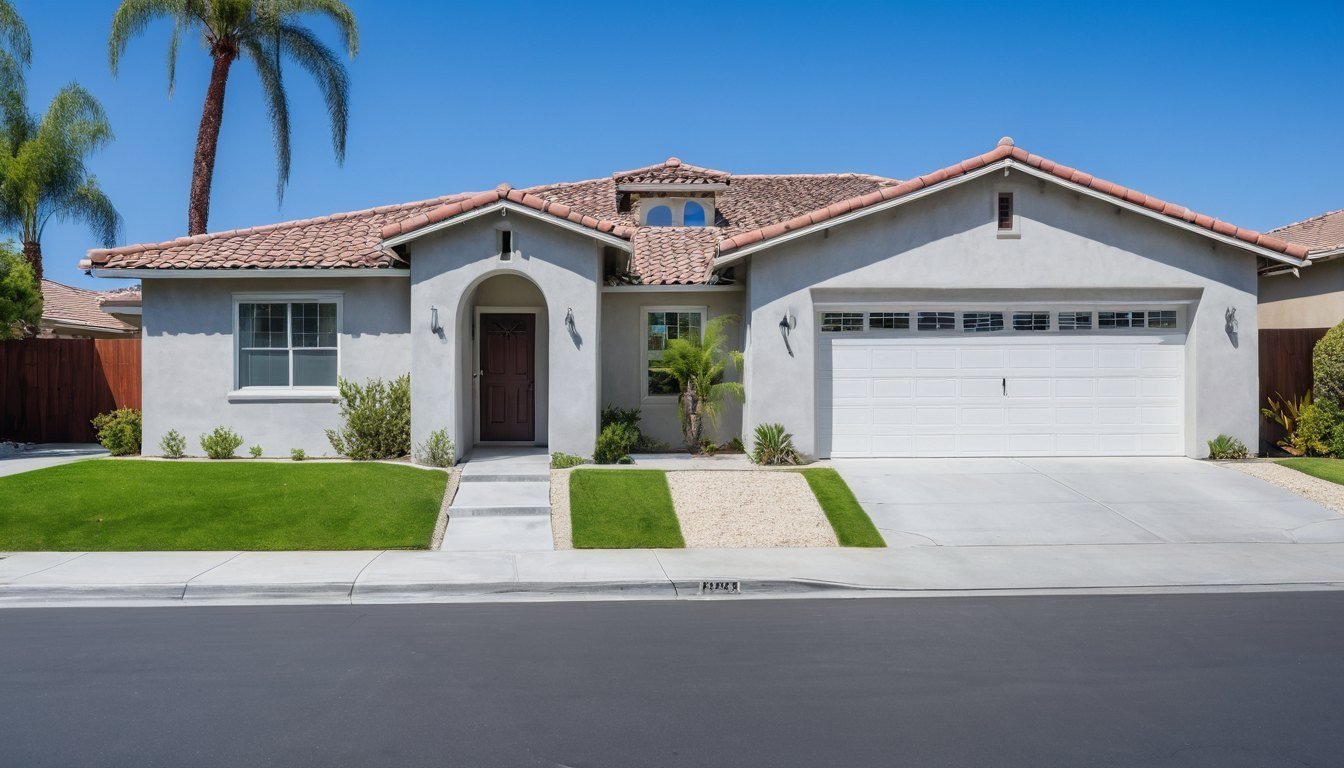
Two cars, one patch of front lawn, and a family that parks on the grass whenever guests arrive. By February the grass is mud and the neighbors have opinions. Sound familiar? That is how most new driveway projects start.
Concrete driveway building in San Jose CA is more than pouring a gray rectangle. It is a base, a thickness, a slope and a careful meeting with the street. Get those four right and the driveway just sits there, looking fine, for decades.
Concrete driveway building starts where the water will end up
On a driveway, the first question is not color. It is where rain goes. We want the surface to drop toward the street or a safe drain, never toward the garage. Even a half inch of wrong slope at the door can leave a puddle inside after a storm.
If your lot slopes toward the house, we plan a shallow channel or a drain at the garage end. It is a small detail you will never notice until the first big rain, and then you will be very glad it exists.
The apron belongs to the city, more or less
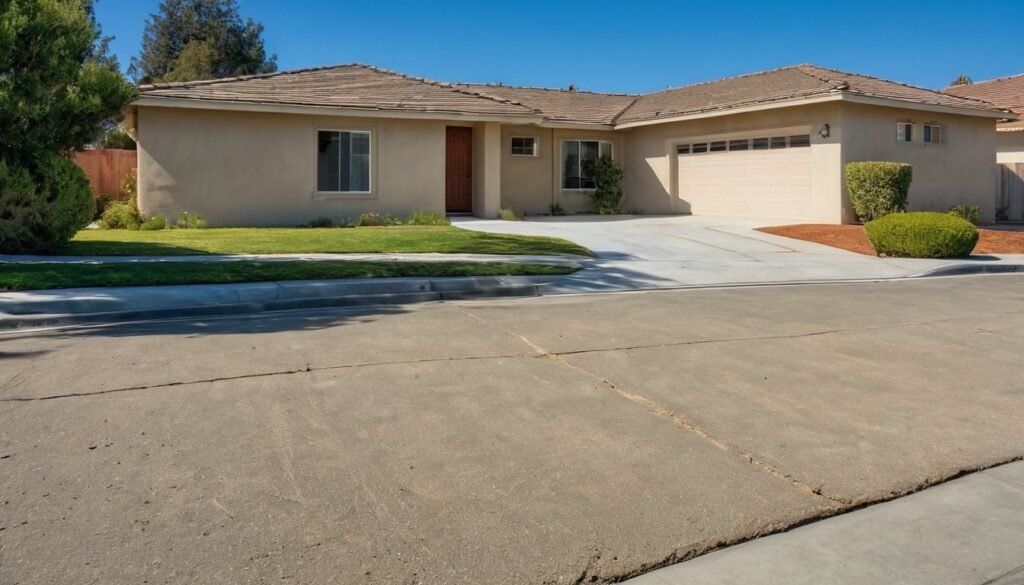
Where your driveway meets the sidewalk and curb is called the apron. In San Jose, the owner pays for the sidewalk, curb and driveway approach next to the lot, and a permit is needed before anyone touches them. Other cities have their own versions of that rule.
For concrete driveway building we plan the new pour so the apron lines up cleanly with the curb cut. For walkways beside it, take a look at our sidewalk work.
Thicker where the trucks turn
A family sedan is gentle. A delivery truck, a moving van or a trash truck backing up is not. We pour most residential drives at a normal thickness, then thicken the section near the street and anywhere a heavy vehicle may roll.
We also pack the base more firmly under areas that will see turning wheels, because twisting tires are harder on concrete than straight driving.
Finish, color and the neighbor test
A broom finish gives grip and hides tire marks. Add a border or a colored band and the driveway looks custom without costing much more. A deeper color needs sealer to keep from fading, so ask about sealing and staining.
If the house sits in a neighborhood with strict rules, show us the HOA letter. We have seen the ones that ban color and the ones that demand it.
Before you call
Have these handy at the visit.
- A rough idea of how wide you want the drive at the street and at the garage
- Whether you will have a gate, a basketball hoop or a trailer parked there
- Where the water meter, the cleanout and any street trees sit
- Any HOA letter or neighborhood rule
Driveway questions, answered like neighbors
We'd like to widen our driveway by a car length and a half. Is that a big deal?
Not usually, but widening deserves a look at a few things first. The new pavement has to tie into the old one, and old and new concrete behave differently. We cut a clean edge, add steel dowels across the joint when it makes sense, and pour the new part so it lines up with the old.
Cities also care about how wide a driveway can be where it meets the street. The curb cut, the sidewalk and the number of cars the lot allows are all part of the rules. In San Jose the owner handles the approach, and a permit comes first. We help you work through which pieces apply to your address.
There is another detail: the area you are widening may have grass, a sprinkler line or a tree. We deal with those before we dig. The best way to get started is to send a photo showing the front of the house with a tape measure on the ground.
How thick should a new driveway be, and does thicker always mean better?
For a regular family home, a standard residential thickness with steel or fibers inside works well when the base under it is solid. Thicker is better only if the extra thickness goes where it is needed. Concrete driveway building for a car only household can be thinner than one that carries a recreational vehicle or deliveries.
A thicker slab on a weak base is worse than a thinner one on a good base. The base spreads the load, and the soil under it decides the rest. Clay that stays wet and soft will fail under any thickness. That is why we dig out soft spots and add crushed rock before pouring.
If you own a heavy truck, a trailer or a boat, mention it. We will use a thicker design for the places those loads travel. At the estimate you will see the thickness in writing, along with what is underneath it, so you can compare it with any other bid.
Does the new driveway need to match our neighbor's, or can we do our own thing?
You can usually do your own thing, with two exceptions. Some neighborhoods have an HOA that sets rules about color, pattern and materials. A few cities also have design guidelines for older neighborhoods. A quick call to the HOA before we pour saves a lot of headaches.
If nothing restricts you, have fun. A light broom finish with a plain border looks sharp and costs little. A contrasting band of color along the edge frames the house. For a bigger statement, a stamped or exposed aggregate finish gives texture that stands out. Our decorative concrete page has ideas for concrete driveway building with some personality.
Whatever you choose, think about maintenance. Dark colors show dirt and oil. Light colors show tire marks less and stay cooler under bare feet. And if you plan to sell in a few years, a classic, tidy finish is almost always the safer bet.
How long before we can drive on it, and where do the cars go meanwhile?
Foot traffic is fine after a day or two. Cars are another matter. We ask you to stay off the driveway with vehicles for about a week, and heavier trucks for a few weeks, so the concrete can finish gaining strength. Driving too soon can leave tire marks, chip edges and weaken the surface.
The cars have to sleep somewhere, so we plan that before the pour. Common solutions are parking on the street, in a neighbor's driveway with permission or at a relative's house for a few days. If street parking is tight in your neighborhood, tell us early so we can choose a day that fits.
We set up barriers to keep people and pets away from the wet concrete, and we ask you to keep sprinklers off the new surface for the first days. It is a small pause that gives you something that lasts for years.
We have two street trees in front. Can they stay?
Often they can, but it takes planning. In San Jose, the owner is responsible for the street tree next to the lot, and any pruning or removal needs a permit. That means you can't cut roots or branches freely, and neither can we.
What we do is shape the driveway around the roots. Sometimes we shift the driveway a bit. Sometimes we leave a planting strip, add a flexible joint, or use a root barrier on the side nearest the tree. If the tree is a poor fit for the spot, a city arborist may allow removal after a request.
The key is to decide about the trees before the estimate, not after. Send a photo of each trunk and the ground around it. We will point out which roots are shallow and which direction they travel. Then we can tell you whether the driveway can work around them or whether the tree is the real problem.
Is it worth pouring a concrete driveway, or should I just do gravel?
Gravel has a place, mostly where the lot is large, the traffic is light and the budget is tight. It is easy to lay and easy to change. It also shifts, picks up weeds and pushes stones onto the street and into the garage. After a few winters most gravel drives need new rock and regrading.
A concrete driveway costs more up front and then asks for very little. It handles cars, trucks and bikes. It makes a smooth path for wheelchairs and strollers. And it holds its shape in rain. In a part of the world where houses are expensive and curb appeal matters, many buyers also see a concrete driveway as a plus.
We are happy to talk about both. Tell us what you need the driveway to do for the next ten years and we will give you an honest view, even if the answer is a smaller pour or a gravel strip for part of it.
Ready to stop parking on the lawn? Call (408) 790-0568 or fill in the estimate form, and bring your tape measure if you feel brave.