
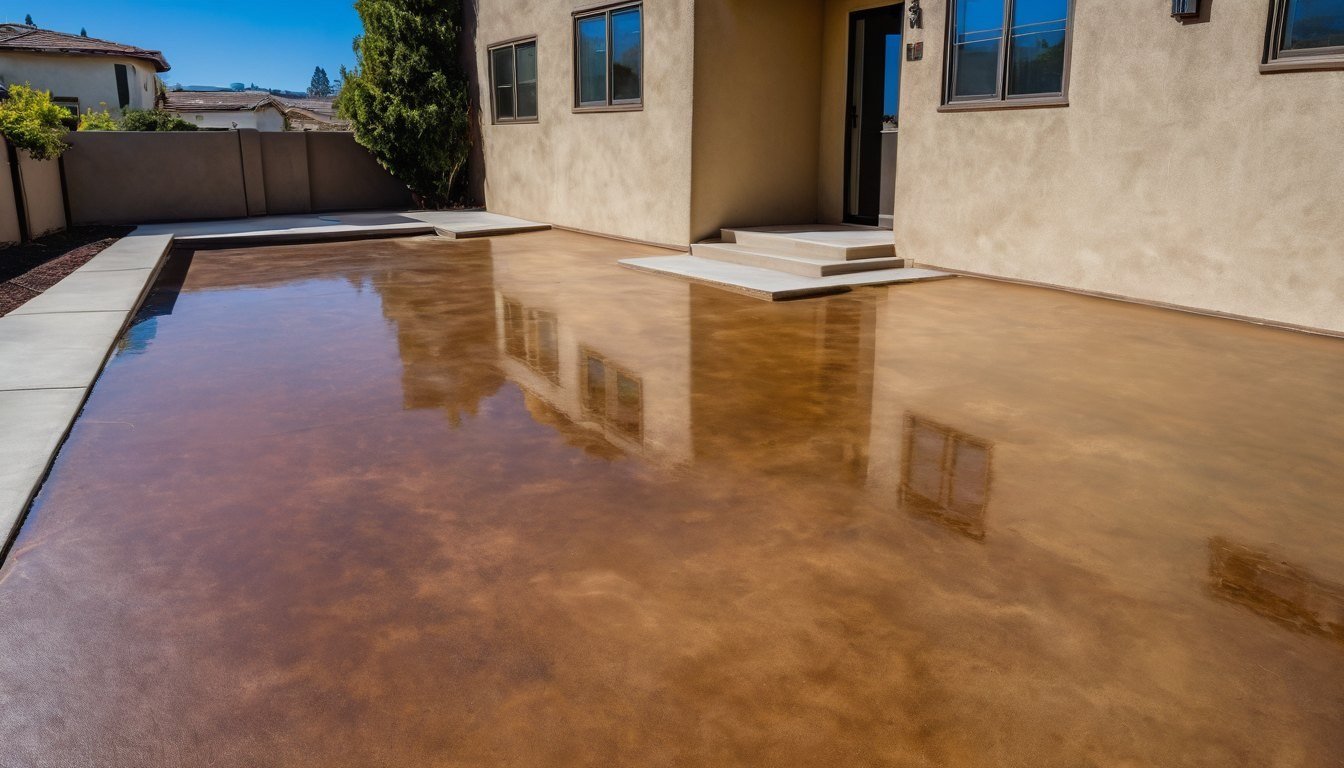
Your patio is gray. Your fence is gray. Your driveway is gray, and your garage is somehow a slightly different gray, and the whole yard looks like a rainy Tuesday. You do not need to tear anything out to change the mood.
Concrete staining and sealing in San Jose CA adds color to the slab you already own and protects it from the things Santa Clara Valley throws at it: strong sun, dry summers, wet winters and very hard water.
How concrete staining and sealing works
Stain soaks into the surface and changes its color. Acid stains react with minerals in the concrete and create soft, cloudy tones like old leather or stone. Water based stains give a wider range of colors and a more even look. Dyes add vivid tones.
After the stain, a sealer locks it in and guards the surface. Without it, color fades and water, oil and dirt soak right in.
What stain can and cannot do
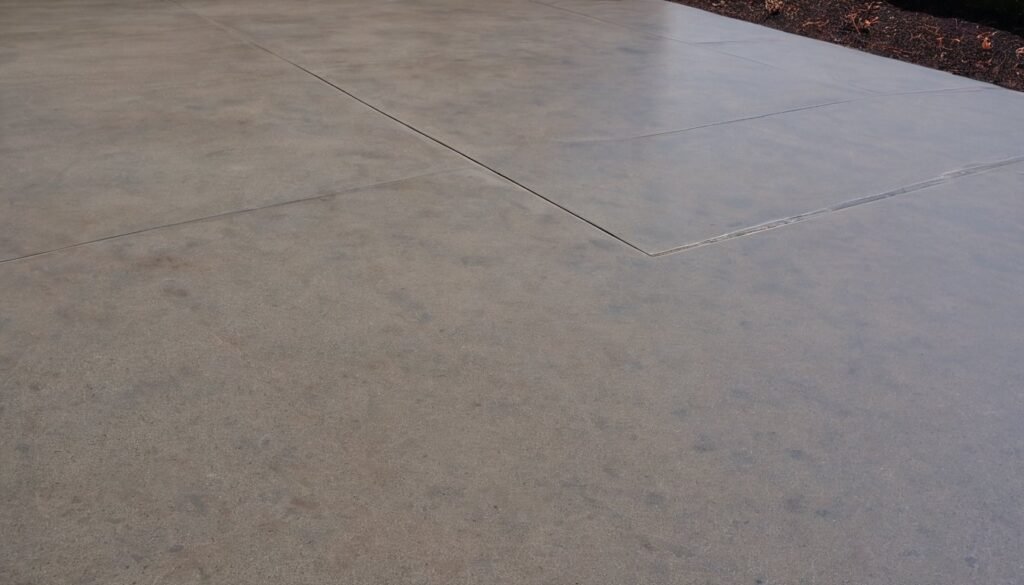
Stain is translucent, so it shows what is underneath. Cracks, patches and old marks may remain visible and even add character. It will not hide big flaws the way a solid coating or a resurface will.
Every slab takes stain a little differently, which is part of the charm. A test patch in a quiet corner shows how yours behaves before we do the whole thing.
The right sealer for the job
Acrylic sealers give a clear, protective film and enhance color. Penetrating sealers soak in and leave a natural look. Polyurethane and other tough coatings stand up to heavy traffic, like garage floors and pool areas.
We choose based on use: sun, foot traffic, cars, pets and pools. Pool decks and driveways ask for different things, as you can see on our pool deck page and garage floor page.

Hard water, sprinklers and keeping it good looking
The water in this valley is very hard, and sprinklers leave chalky spots that show more on dark colors. Aim heads away, or wipe the spots with a mild cleaner soon after they appear.
A well sealed surface cleans with a mop and a gentle cleaner. Plan to reseal every two to three years, sooner in full sun or high traffic.
Before you call
Pull together these basics.
- Photos of the surface and what is around it
- Colors you like, or a swatch from your house trim
- Whether the concrete is new or older, and if it has been sealed
- Any spots with oil, rust or paint
Stain and sealer questions, answered in plain terms
Can new concrete be stained right away, or do we have to wait?
Wait. A fresh slab has to cure and dry before stain will take evenly. For most stains, we like to wait about a month after the pour. Concrete that is still damp inside or still hardening will take color in blotches, and the stain may not bond properly.
During that month, the slab gains strength and the surface changes. Chemicals in the mix settle down, and moisture leaves the slab. We also use that time to plan the color, choose the sealer and schedule a dry weather window for the work.
If you want color right away, there is another way. Color can be mixed into the concrete before the pour, called integral color, or applied to the surface in the first hours as a color hardener. Each gives a different look than stain. We can talk through the pros and cons when you plan a new slab. For an existing slab, a visit lets us check its age, sealer history and condition so we can say what will work. For concrete staining and sealing on a fresh pour, patience pays.
Will stain cover the oil spots and cracks on our driveway?
Not completely. Stain is see through, so it reveals most of what is on the surface. Light oil spots can be cleaned and often fade enough that they blend. Deep, dark oil stains may show through, and we may need to treat them with a poultice, which is a thick cleaning paste, before staining.
Cracks stay visible too. We can fill and sand them, and the stain will soften the look, though the line remains. Some people like it, since it adds a worn, natural feel.
If you want a flat, uniform surface, a resurfacing layer may suit you better. It covers cracks and stains and then takes color. Our resurfacing page explains how that works. During the visit, we look at the worst spots and tell you what stain can do for them and what it cannot. A short test patch shows you the effect before we commit to the whole driveway. Honest expectations make for a happy ending.
How often do we need to reseal, and what does it cost to skip it?
In our climate, plan to reseal every two to three years on patios and driveways. Garages and indoor floors may last longer. Full sun and heavy foot traffic shorten the cycle, while shaded areas stretch it.
Skipping sealer has a price. Without it, the stain fades, water seeps in and the surface picks up dirt and oil more easily. Eventually the color turns patchy. Restoring a neglected surface is possible, but it takes cleaning, sometimes stripping the old sealer, and a new coat.
Signs that it is time: water no longer beads on the surface, the color looks dull or chalky or the sheen has worn off in walking paths. We give a simple care sheet after every job, and we are happy to come back to recoat. A thin new coat on a surface that is still in good shape is quick and costs much less than a full restoration. Treat it like painting a fence: small, regular care beats a big rescue later.
Is sealed concrete slippery?
It can be, depending on the sealer. Glossy, film forming sealers on smooth concrete can be slick when wet, especially on steps and around pools. The fix is easy: we add a fine, non slip grit to the sealer, choose a satin or matte product and use a light texture on the concrete when possible.
Outdoors, where rain and sprinklers are common, grip matters more than shine. Indoors, in a dry garage or room, a glossier finish is fine. We talk through the use of each space and choose accordingly.
One trick is to wet a small test area and step on it in the shoes you wear outside. If it feels slippery then, it will feel slippery when it counts. We bring samples, and we are glad to let you test them. For pool decks and steps, we treat grip as the first priority. If anyone in the family has limited balance, say so, and we will plan the finish with that in mind.
What colors can we choose, and will they match the house?
There is a wide range. Acid stains are mostly earth tones: browns, tans, rusty reds, soft greens and blue greens. Stains made with water, along with dyes, cover many more shades, from warm grays and charcoal to terracotta and even bright colors. You can layer stains for depth, or use two colors for a marbled look.
Matching the house takes a little care. Bring a swatch of your trim or stucco, or take a photo in daylight. We look at the light on your patio, which may be shady or sunny, and suggest a few options. A test panel on your own slab is the best proof, because colors react differently on every surface.
If your slab is old and blotchy, a darker color hides more. A lighter color shows more variation. Our decorative concrete page has ideas for borders and patterns that tie into the color. If you are not sure, start with a soft earth tone. It goes with almost everything and ages gracefully.
Is it safe for kids and pets while the work is done?
Yes, once the product has dried and cured, and we keep everyone away until then. Some stains and sealers have a strong smell and take a day or more to dry fully. We ask you to keep children and pets off the area and away from the fumes during that time.
We use products suited to the location and follow their directions on ventilation and curing. For indoor work, we open windows and use fans. For a garage, we keep the door open. We also protect plants, siding and furniture around the work area with plastic and tape.
After curing, the surface is safe for normal use. Many sealers are made for patios where kids play and dogs run. If you have an allergy or sensitivity, tell us before we choose a product. Some brands have lower odor. We also schedule the work around your calendar, so you are not stuck without a path to the door. A clear plan makes concrete staining and sealing smooth for everyone, including the dog.
Tired of the rainy Tuesday look? Ring (408) 790-0568 and we will bring color samples, or drop your photos on the estimate form.