
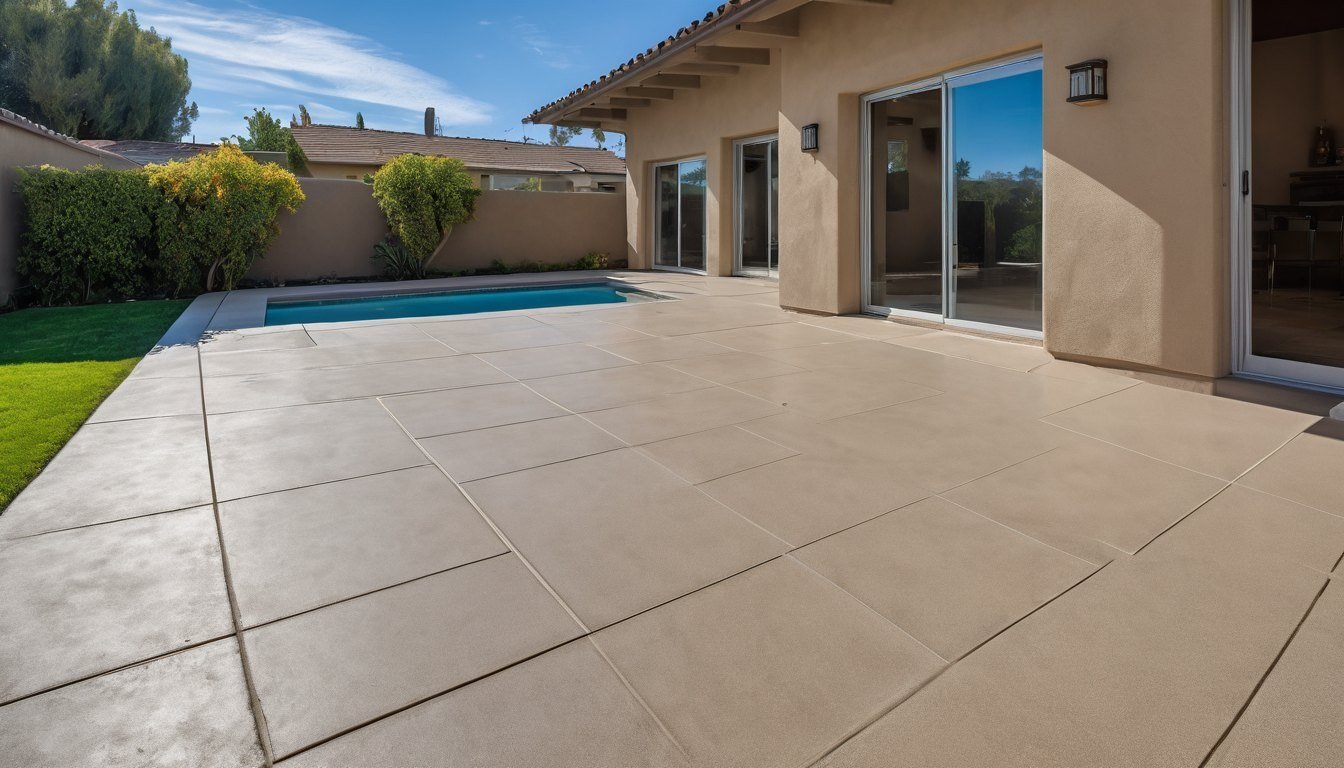
Stroll the side streets near Lincoln Avenue in Willow Glen, where Victorian, Craftsman and Tudor homes sit side by side, and you will notice something about the front walks. Every house seems to have its own idea of a welcome. A curved path here, a brick colored border there, a patch of pebbly stone by the steps. Nobody planned a theme, and it still feels right.
Decorative concrete in San Jose CA is how a slab joins that conversation. It takes the same strong, practical material and adds the look that tells visitors someone cared about this corner of the yard.
Decorative concrete comes in more flavors than you think
Exposed aggregate washes the top film away to show small stones, making a pebbly, grippy surface. Integral color mixes pigment through the whole batch. Saw cut patterns create squares, diamonds or curves with a blade. Borders and bands add a frame. Stamping presses in texture, which is explained on our stamped page.
Many projects mix two or three techniques, such as a colored slab with a saw cut grid and a contrasting border.
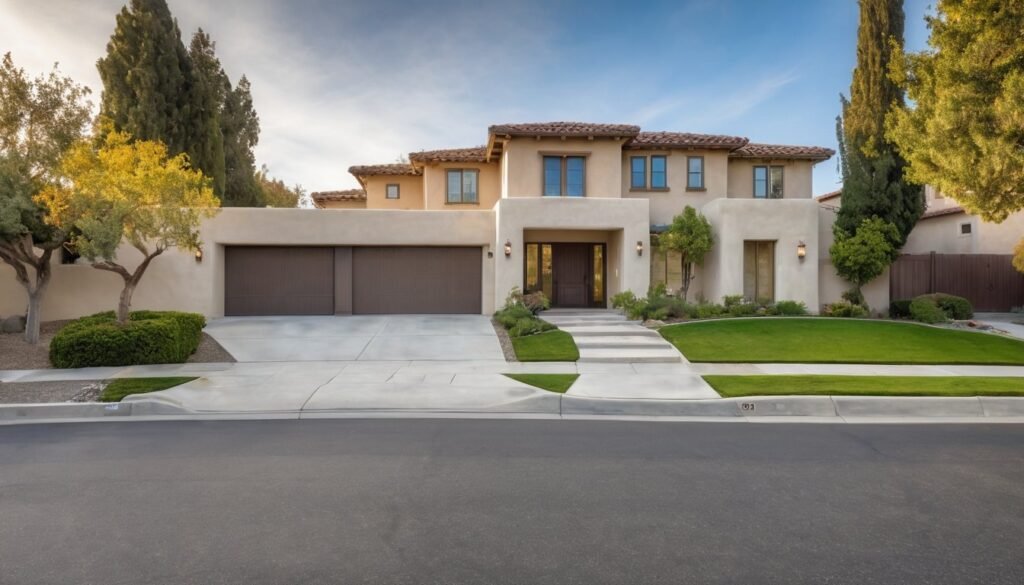
Matching decorative concrete to the house and the street
Willow Glen has Victorians, Craftsman bungalows and a few Eichlers. Campbell has ranch homes from the fifties through the seventies. Cupertino has tract homes and some newer builds. Each style suggests different choices.
A midcentury ranch likes clean lines and a simple tone. A Craftsman likes earthy colors and a handmade feel. We bring samples to your yard so you can hold them next to your siding and trim.
Color that stays put
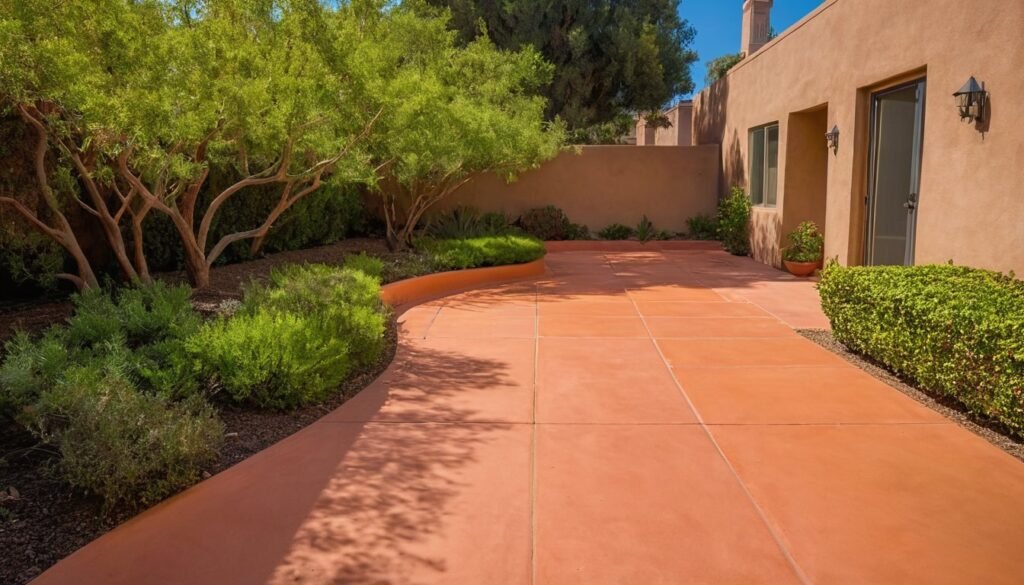
Color mixed through the concrete fades the least. Color applied to the surface looks richer at first and needs sealer to keep it. Light colors reflect heat and stay comfortable. Dark colors look dramatic and show dust and water spots more.
Our hard tap water and sprinklers leave chalky marks, so a good sealer and some aim adjustment help. See staining and sealing for ongoing care.
Rules, neighbors and homeowner associations
Some neighborhoods have homeowner associations that approve colors and materials, and a few older districts care about style. We help you gather what they need, like a sample board or a photo of a finished job.
If your project touches the sidewalk or street edge, the city has its say too. Our sidewalk page explains the permit side.
Before you call
Make a short collection.
- Photos of finishes you admire, even from other cities
- A photo of your house in daylight
- How you will use the area: dining, walking, parking
- Any HOA or city rules that may apply
Decorative concrete questions worth asking
What is exposed aggregate, and is it a good choice for a driveway?
Exposed aggregate is concrete with its top film washed away to reveal the small stones inside. The mix includes carefully chosen pebbles or crushed rock, and after the concrete is poured and starts to set, the surface is sprayed or brushed to uncover them. The result is a textured, natural looking surface.
It is a very good driveway choice. The texture grips tires and shoes, it hides small stains and tire marks and it ages gracefully. It can be a little rough for bare feet and for toys on wheels, so it is less popular for play areas. Snow shovels are not a worry in San Jose, but sweepers and leaf blowers do fine.
Sealing keeps the stones bright and helps shed dirt. Over time, a few stones can pop out, so the quality of the mix and the finish matter. We choose stones that suit your house, like warm river rock or cool gray granite, and we show samples. If you want a decorative concrete driveway that does not look like every other one, aggregate is a strong place to start.
Can we mix decorative styles on one project, like color plus saw cuts?
Yes, decorative concrete can mix styles, and it is often the best way to get a custom feel without a huge price jump. A common recipe is a colored slab with a simple saw cut pattern, like squares or diamonds, and a border in a contrasting color. Another is a broom finished main area with a smooth, darker band along the edge.
The key is to keep it consistent. Too many patterns in a small space looks busy. A good rule is two or three elements that repeat. For example, the border color can echo the front door, and the pattern lines can follow the angles of the house.
We sketch the plan before work starts, sometimes using spray paint on the ground so you see the lines in the real yard. That is the moment to change anything. Saw cuts are done after the concrete has hardened, so we can adjust the layout with care. Ask about combining finishes at the estimate, and we will show you a few options that work together. If you want to understand each piece, our resurfacing page explains how a plain slab can be refreshed too.
Is decorative concrete harder to maintain than plain concrete?
A little, but not much. Plain concrete is easy to ignore. Decorative concrete rewards some care. The main chore is sealing every couple of years to protect color and texture. Sweep or rinse the surface when dirty, and use a mild cleaner for stains.
Textured surfaces, like exposed aggregate, collect dirt in the crevices, so a stiff broom or a gentle rinse helps. Smooth colored surfaces show water spots more than rough ones. Keep sprinklers from soaking the surface, and wipe off oil quickly.
What you get in return is a surface that looks designed and holds its value. In a valley where yards are small and houses are expensive, a thoughtful patio or entry makes a difference. If you want the lowest maintenance, choose a mid tone color, a light texture and a good sealer. We provide a care sheet with every job, and we are available when questions come up months later. A well made surface is a pleasure, and a little attention goes a long way.
Will my HOA or city care what color and pattern I choose?
Some do, so check before decorative concrete goes in. Homeowner associations often have rules about exterior colors, materials and changes to a front yard. They may want to approve a sample, a drawing or a photo. A few older neighborhoods and historic areas have design guidelines too.
The simplest approach is to ask first. A short email or a form with a picture of the finish you like is usually enough. We can provide a sample board or a photo of similar work to include. If your driveway apron or sidewalk is part of the project, the city has requirements for that part of the work, and permits come before the pour.
If the HOA has a rule you do not like, there may be room to negotiate. Many boards approve earthy, natural looking colors without a fuss. Bright or unusual choices need more explaining. We keep a record of what was approved, so there are no surprises later. Our driveway building page and the patio page show examples of layouts that tend to get approved.
What is the difference between stamped concrete and other decorative finishes?
Stamped concrete presses a pattern into wet concrete using mats, so the surface looks like stone, brick or wood. Other decorative finishes do not imitate another material. Exposed aggregate shows the real stones inside the concrete. Colored concrete uses pigment. Saw cut patterns create shapes with lines. Polished concrete grinds the surface to a smooth sheen.
Each has strengths. Stamping gives the most dramatic change in appearance, and it costs more. Exposed aggregate has a natural feel and good grip. Color is flexible and easy to pair with others. Saw cuts are simple and affordable. Polishing is popular indoors and in modern garages.
If you want a stone look, ask about our stamped concrete options. If you prefer a quiet, natural finish, aggregate or a broom finish with color is hard to beat. We often suggest samples side by side. Once you hold them in your hands, the choice gets easy. Your yard and your house will tell you what fits.
How long does decorative concrete last?
A well built decorative concrete slab can last for decades, just like regular concrete. The structure is the same: a good base, the right thickness, steel or fibers and proper joints. The decorative layer on top is what needs a little attention.
Color and sealer wear down over time, depending on sun and traffic. A recoat of sealer every couple of years brings the finish back. Exposed aggregate can get a fresh seal and look new. A saw cut pattern lasts as long as the slab does, and joints can be refilled when needed.
What shortens life is poor base work, bad drainage or chemicals that attack the surface. The valley clay is hard on any slab, so the groundwork matters more than the finish. We spend time on the base for every decorative job. If you plan to live in your home for a long time, or you want a feature that helps with resale, the investment can pay off. Ask about our favorite combinations, and we will tell you which ones have held up best on the jobs we have seen.
Want to hold a few samples in your hand? Call (408) 790-0568 or leave your photos on the estimate form and we will bring the board.