
Picture the grill parked on a few old pavers that rock when you lean on them, and a folding chair with one leg a little shorter than the others. That is a backyard asking for a real floor. Good concrete patio installation in San Jose CA turns that patch of dirt and weeds into a flat, solid place where the table stays put and the kids can run around barefoot.
We pour patios on narrow Willow Glen lots and on wide, sloping yards near Almaden. The tricks barely change from one to the next. Figure out where the water goes, build a firm base on our clay, and pick a finish that won't cook your feet by four o'clock in July.
Decide where the water goes before you decide where the chairs go
Every patio needs a slope, and it needs to be a slope you can barely see. About a quarter inch of drop for every foot moving away from the house is plenty. It keeps rain from pooling by the back door and sneaking under the threshold.
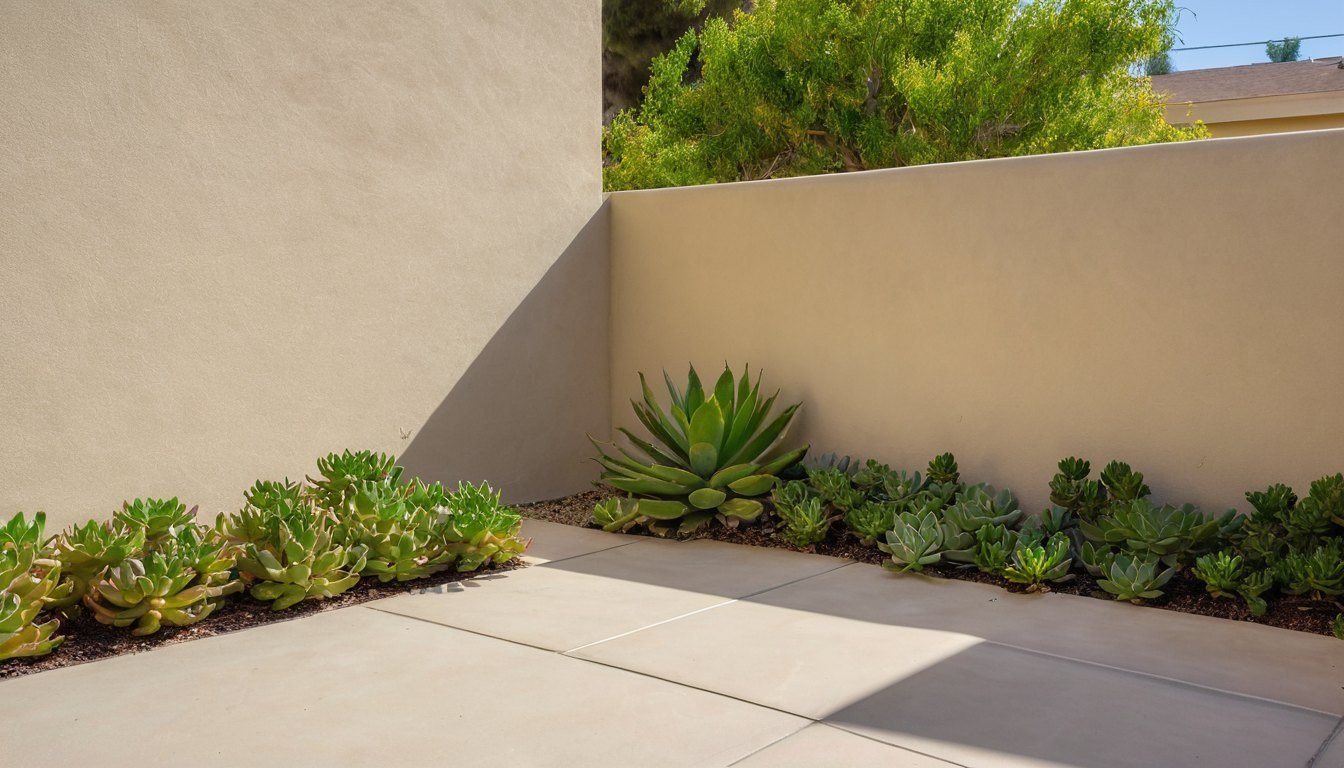
If your house has stucco walls, look at the metal strip along the bottom edge. That strip lets moisture escape, and fresh concrete should never bury it. We leave a few inches of gap so the wall can breathe, and we ask where each downspout empties so none of them aims at the new slab.
Clay on the bottom, crushed rock in the middle, concrete on top
Backyards in the valley usually sit on clay, which swells in winter and shrinks in summer. Pour straight onto it and the patio will heave and crack by its second spring. So we strip the grass, dig out the soft stuff, add crushed rock and pack it firm before any concrete shows up.
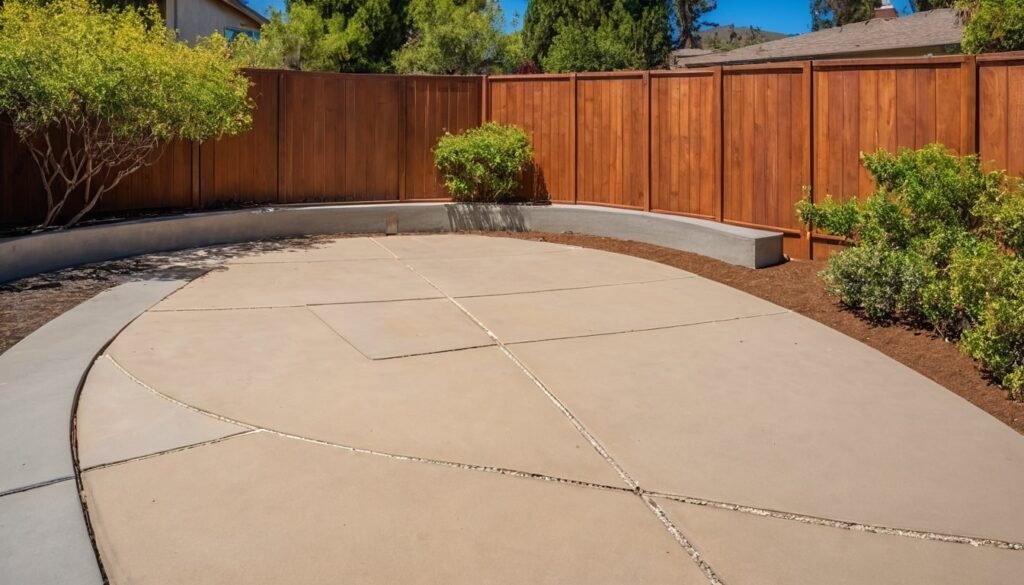
For a normal concrete patio installation we pour around four inches, with wire mesh or fibers inside to hold small cracks tight. Then we cut control joints, which are shallow grooves that tell the concrete where to crack. Concrete always cracks somewhere. The joints just choose the place.
Finish and color for a concrete patio installation that survives July
A smooth finish looks clean but gets slick when wet. A light broom finish drags fine lines across the surface and gives your shoes some grip. Pale colors stay cooler than dark ones, which matters if the patio gets full sun.
Want something fancier? Ask about stamped patterns that mimic flagstone, or color added through staining and sealing. Both look great, and both need a bit of care, because the tap water here is very hard and sprinklers leave white spots on anything they hit.
Trees, hot tubs and other complications
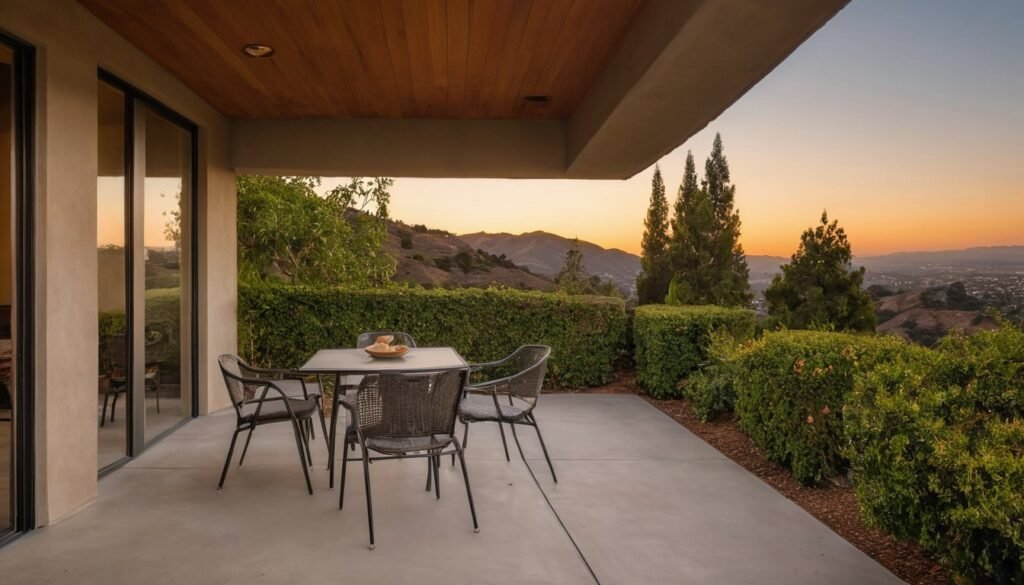
A big oak or a liquidambar will send roots toward a nice moist slab, so tell us where the trees are. We can often leave a gap, add a root barrier or shift the shape of the patio to protect both the tree and your investment.
A hot tub or an outdoor kitchen is heavy, and the patio under it should know about it from day one. Mention the plan and we will thicken that spot or suggest a separate equipment slab so nothing sinks later.
Before you call
A few answers make the first visit faster.
- Where do your downspouts empty out?
- How big do you picture it, even if you only know it as eight steps from the back door?
- What will sit on it: a table, a hot tub, a fire pit or all three?
- Are any trees growing within about ten feet?
- Where do the sprinkler lines run?
Patio questions from people with real backyards
Our backyard slopes toward the house. Can a patio even work there?
Yes, but the patio needs a plan for the water. When the yard falls toward the house, rain wants to run onto the new concrete and then to the back door. We solve that in one of a few ways. Sometimes we shape the dirt so the patio itself slopes the other way. Sometimes we build a small swale, which is a shallow dip in the yard, to carry the water around the sides. In a tougher spot we add a drain with a pipe that leads somewhere safe.
The worst move is to ignore it and hope. Water that reaches a stucco wall can stain it, rot trim and run under doors. At the estimate we walk the yard after looking at the gutters, and we mark where the water goes today. That walk usually tells us whether we need a simple slope or a drain. A concrete patio installation on a tricky lot costs a bit more to plan, and it saves a lot more later.
My family grills every weekend. Should I pick a plain finish, a broom finish or something stamped?
For a grill patio we usually suggest a medium broom finish. It hides small scuffs and grease dots better than a glassy smooth surface, and it grips shoes when someone carries a hot tray across a damp evening. A smooth steel trowel finish looks great in photos, but it is slippery when wet and shows every footprint.
Stamped concrete is a lovely option for a concrete patio installation if you want the look of stone. It costs more and needs sealer every couple of years to keep the color rich. Grease spots show up faster on a stamped surface, so keep a mat under the grill and wipe spills promptly.
One trick for either choice: add a border or a few saw cut lines to break the surface into sections. It looks planned, and it gives the concrete somewhere to crack in a straight line. Our staining and sealing page explains how to keep color fresh once the patio is in.
The patio we inherited with the house is sinking on one side. Do we start over?
Not always. First figure out why it sank. Water running under one edge washes soil away, a downspout dumping beside the slab does the same thing, and old fill that was never packed will slowly settle. If the slab is in one piece and the cracks are modest, we can sometimes lift it back into place and fix the water problem that caused the drop. That path is described on our concrete leveling page.
If the slab is broken into several chunks, or it has been moving for years, replacing it is cleaner. We break it out, haul it away and rebuild with a proper base. You will end up with a patio that is flat from the first morning and stays that way.
At the visit we press on the low edge, look for voids, and check the drainage. Then we tell you honestly which path makes sense. If a repair is enough, we say so.
There's a big tree near where we want the patio. Will roots wreck it?
Roots go where the water is, and a fresh slab traps moisture underneath, so yes, a patio too close to a tree can be lifted over time. How close is too close depends on the tree. Some trees send roots wide and shallow. Others stay deeper and cause little trouble. Cutting a large root is also a risk to the tree itself, which is why we ask you to point out every tree before we dig.
Options include moving the patio a few feet, curving the edge to leave breathing room, adding a root barrier along one side, or pouring a thicker slab with steel to resist small lifts. In some cases a city rule protects a certain tree, and then the tree gets a vote.
If you already see roots coming up near the spot, take a photo and send it with the estimate form. Pictures of the base of the trunk help us judge it before we visit.
Can we add a hot tub or an outdoor kitchen later, or do I have to decide now?
Decide now if you can, and tell us if you can't. A hot tub full of water and people is very heavy, and an outdoor kitchen with a stone counter and a grill is heavier than it looks. The concrete underneath should be thick enough and reinforced enough for that load, and the base underneath should be packed tight. Adding weight later to a thin slab is how you get a cracked corner.
If you are not ready, we can leave the future spot a little thicker and mark it, or pour a separate pad for the tub and tie the patio to it with a clean joint. We can also stub in a conduit for electrical lines before the pour so you are not cutting into new concrete later. That small step costs very little now.
Mentioning your five year plan at the estimate is not a commitment. It just helps us shape the work.
Do we need city approval just to pour a patio?
It depends on the city, the size and how it sits on your lot. Many plain, at grade jobs of this kind do not need a building permit, but cities in Santa Clara County care about other things. They may limit how much of your lot can be covered with hard surfaces, they may require a minimum distance from the property line, and some neighborhoods have homeowner association rules too.
Any patio that includes a built in barbecue, a roof, a wall or a change in the slope of the yard may pull in a permit. That is true even if the concrete itself would not.
We check the rules for your address before we price the job, and we tell you straight if a permit or an HOA approval is part of the plan. If you want to check on your own, your city's building department can answer in a short phone call. Start by describing the project in plain words and asking what applies.
Backyard ideas still bouncing around? Ring (408) 790-0568 and talk it through, or leave a few notes on the estimate form and we will phone you back.