
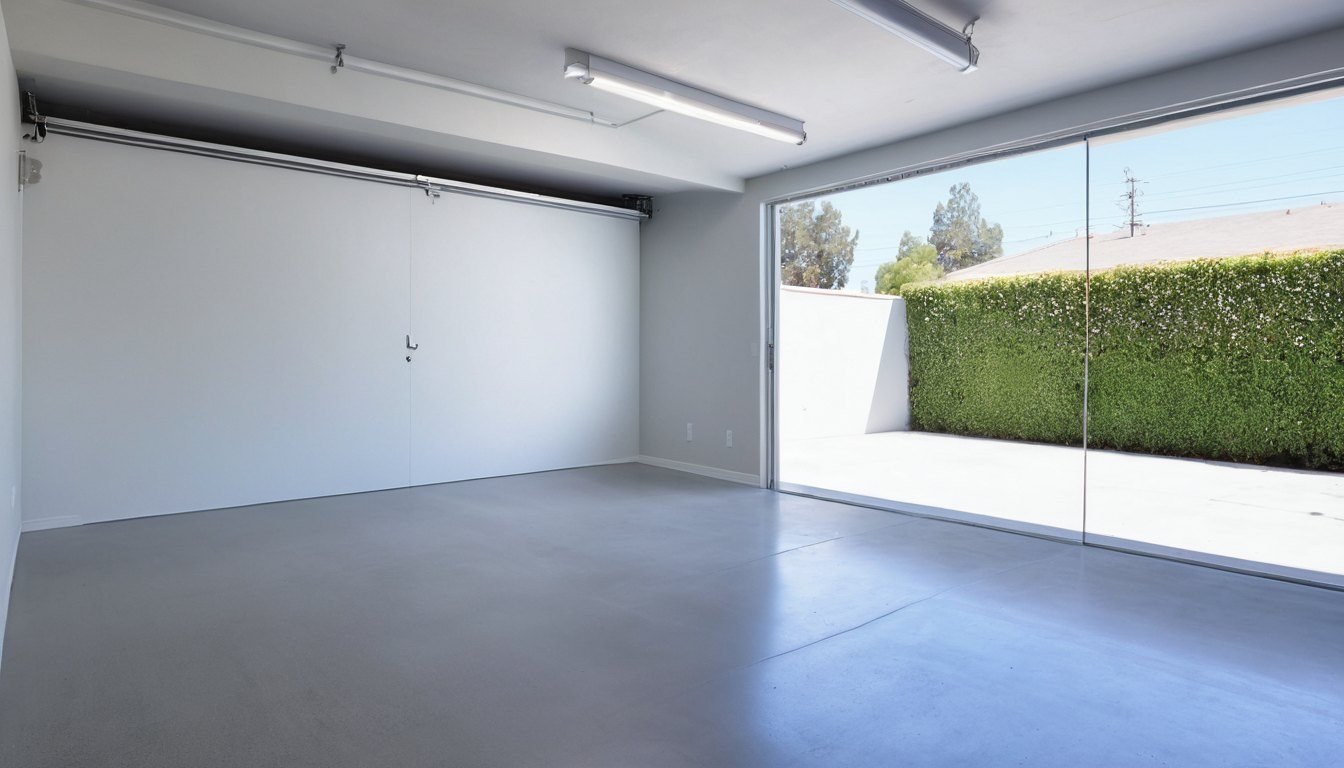
There is an oil stain on your garage floor in the shape of a state nobody can name. A hairline crack runs from the water heater to the door, and every year it gets a little longer. The floor works, technically, but you stopped sweeping it a long time ago.
Garage floor concrete in San Jose CA has a harder life than people think. It holds cars, tool chests, freezers and the occasional kayak, and it gets rained on at the door and dripped on in the middle. A good floor is built for all of that.
The slope that sends the water out
A garage floor needs a gentle slope toward the door, about a quarter inch for every foot, so water from tires and storms can leave instead of pooling. The slope should be small enough that a car and a workbench do not notice it.
If your garage is cut into a hillside or sits below the driveway, water can sneak in during heavy rain. We look at the door, the driveway and any drain before planning the pour.
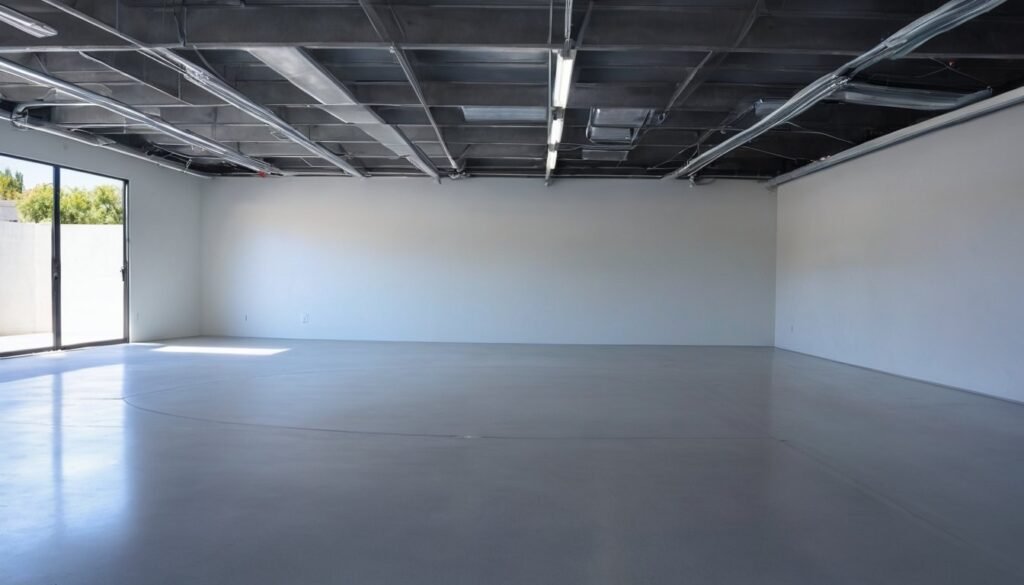
Garage floor concrete: thickness, steel and what is underneath
For cars, a standard residential slab with steel or fibers works well. For a heavy lift, a big freezer, a workshop machine or a motorhome, thicker concrete and more steel are better. The base below it must be firm, and a moisture barrier under the slab helps keep the floor dry.
Our valley clay moves, so the base is packed and the slab has joints placed to guide cracks into neat lines.
Finishes for the way you live
A smooth trowel finish is easy to clean and gets a nice sheen when sealed. A light broom texture adds grip for wet shoes. Polished or colored finishes make the garage feel like a showroom.
If you plan an epoxy or polyaspartic coating later, tell us. The surface should be prepared so the coating sticks, and the concrete needs time to cure before coating. See our staining and sealing page for other protective options.
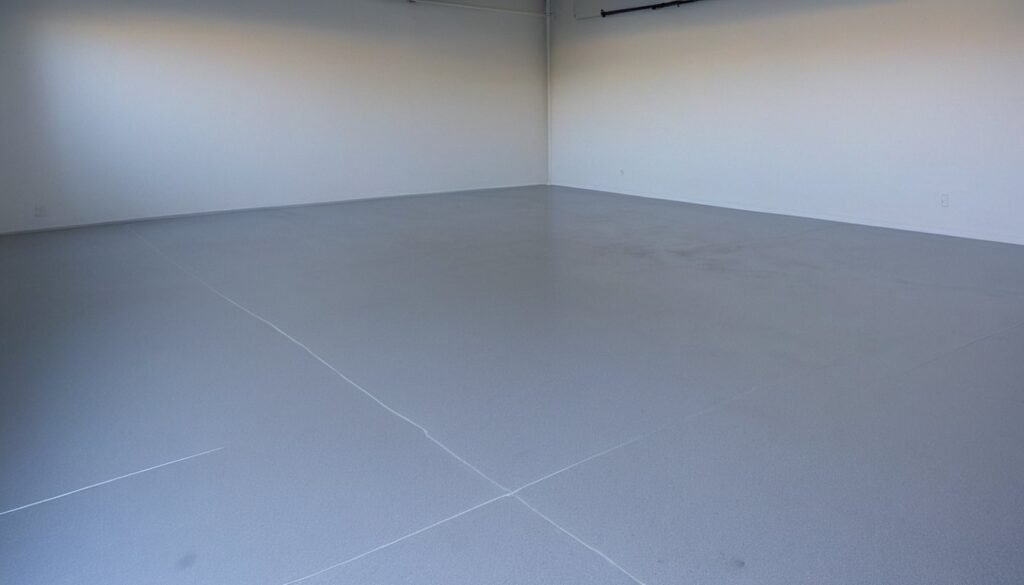
Garage conversions and slab changes
More garages are becoming bedrooms, studios or small apartments. Those conversions often need the floor raised, insulated, cut for plumbing or patched. Our concrete cutting crew opens the slab, and we pour it back smooth. For a separate backyard unit, see ADU slabs.
Before any work, we check for post tension cables and heating pipes in the slab.
Before you call
A few quick answers help.
- What goes on the floor: cars, a workshop, a freezer, a lift?
- Do you plan to coat or stain the floor later?
- Are you converting the space to a room?
- Where does water come in during storms?
Garage floor questions, from the workbench
My garage floor has cracks all over. Is it worth fixing or should the floor come out?
That depends on the type of cracks in your garage floor concrete. Thin, straight hairline cracks are normal and can be filled and forgotten. A web of cracks across the whole floor, or cracks with one side higher than the other, may point to a bad base or moving soil. Garage floor concrete takes a lot of weight, so weak support shows up fast.
To decide, we look at the width of the cracks, whether the surface is flaking and whether the floor sags in places. We also press the slab and listen for hollow sounds. If the base is sound and the slab is mostly in one piece, repairs and a protective coating are usually enough. If large parts have sunk, lifting may help, as described on our concrete leveling page.
When the floor is badly broken or thin, replacement gives you a clean start. We show both prices, so you can compare. If you plan to coat the floor later, a good repair job now makes the final result look much better.
How thick should garage floor concrete be if I want to put a car lift in?
Garage floor concrete under a lift is a serious load, and the answer comes from the lift manufacturer. Most lifts list a minimum slab thickness and strength, and many ask for thicker concrete under the posts. Standard residential garage floors are often thinner than what a lift needs.
If your slab is too thin, we have two choices. We can cut out and pour thicker concrete at the post locations, tied into the old slab with steel, or we can replace the whole floor. The base underneath matters too, because soft soil under a lift post leads to cracks.
Send us the lift's specification sheet, or the model name, and tell us where the posts will go. We will review the numbers and plan the pour. Never install a lift on a slab you are unsure about. It is a safety matter for you and anyone near the car. If you are not ready for the lift yet, we can pour the thicker areas now and mark them, so the garage is ready when you are.
When can I park a car on a new garage floor?
For cars on new garage floor concrete, plan on roughly seven days after the pour. Foot traffic is fine after a day or two. Heavy vehicles and sharp turns should wait a bit longer, since twisting tires can scuff or damage young concrete.
A garage floor goes through a few stages. Right after the pour, the surface is finished and protected from fast drying. In the next days it gains strength, and a light sealer or curing compound may go on. After about a week it is ready for ordinary use. After about four weeks, the concrete reaches its design strength and can take coatings and heavy loads.
We plan where your cars will go in the meantime. Street parking, a driveway or a friend's place all work. If the garage is the only door to your house, we talk about a path in and out. We also keep the door closed or protected from rain while the surface cures. A little patience early on gives you a floor that stays flat and clean for years.
Should I seal the floor, or go straight to an epoxy coating?
Both work, and the choice depends on how you use the garage. A penetrating or acrylic sealer protects the concrete from oil, water and stains without changing the look much. It is simple and affordable, and it can be redone later.
Epoxy and similar coatings create a thick, colorful, glossy layer. They look sharp and resist chemicals, but they need careful surface prep and a floor that is dry. A coating applied to damp or dirty concrete may peel. They can also be slick when wet unless texture is added.
We usually suggest letting new concrete cure for about a month before applying a coating, and being sure the floor stays dry from below. If you are not ready to decide, a simple sealer now is a safe step. For a deeper look at protecting concrete, see our staining and sealing page. Tell us how you use the space, from the car to the ping pong table, and we will suggest the right level of protection.
We're converting the garage to a bedroom. What does the floor need?
A lot of garages are slightly lower than the house, slope toward the door and have no moisture barrier. A bedroom needs a floor that is level, dry and ready for insulation and flooring. We start by checking the existing slab for cracks, slope and moisture.
Options include leveling the floor with a thin topping, adding a moisture barrier and raising the floor with a framed subfloor, or pouring a new slab if the old one is poor. If plumbing is part of the plan, the slab must be cut and patched. Our cutting page explains how we open a slab safely. For larger conversions, the city will require plans and inspections.
Before anything starts, we look for post tension cables and any radiant heating pipes. We also think about the door opening, which often gets filled in with a wall and may need a new footing below it. It is a project with many pieces. Tell us your plan, and we will help with the concrete part.
How do I keep oil stains from ruining the new floor?
Seal it, and clean spills fast. A good sealer keeps oil from soaking in, so drips sit on the surface where a rag can lift them. On bare concrete, oil soaks in and leaves stains that are very hard to remove.
A few habits help. Put a drip tray or a mat under a car that leaks. Keep a bag of kitty litter or a similar absorbent on a shelf for spills. Wipe oil right away, and use a mild degreaser instead of harsh acid.
If you already have stains on an old floor, we can clean light ones. Deep stains may need a poultice, a grinding step or a coating over the top. Our resurfacing page covers fresh surfaces for stained concrete. When the new floor is poured, we can talk about sealing it at the right moment, so you start clean and stay clean. The garage will always be a working space, but it does not have to look like one.
Ready for a garage floor you are happy to walk on? Call (408) 790-0568 or tell us about your garage on the estimate form.