
The back step wobbles a little under the weight of the mail carrier, who has stopped mentioning it out of politeness. Meanwhile the side path has a chip big enough to stub a toe, and there is a flaky patch on the patio that you have been calling character. That is usually how concrete repairs begin.
Concrete repairs in San Jose CA cover a wide range, from a tiny chip to a failing slab, and the right fix depends on what is wrong. Our job is to tell the difference quickly and then do the work properly.
Concrete repairs start with three kinds of cracks
A hairline crack, thin as a pencil line, is usually surface level and can be sealed. A wider crack with matching sides is a movement joint that wants a flexible filler. A stair step crack, or one with a height difference, is a sign the slab moved and needs a closer look.
Knowing which one you have saves money on concrete repairs. A cheap seal on a moving crack fails. A big repair on a harmless hairline wastes your budget.
Flaking is not the same as cracking
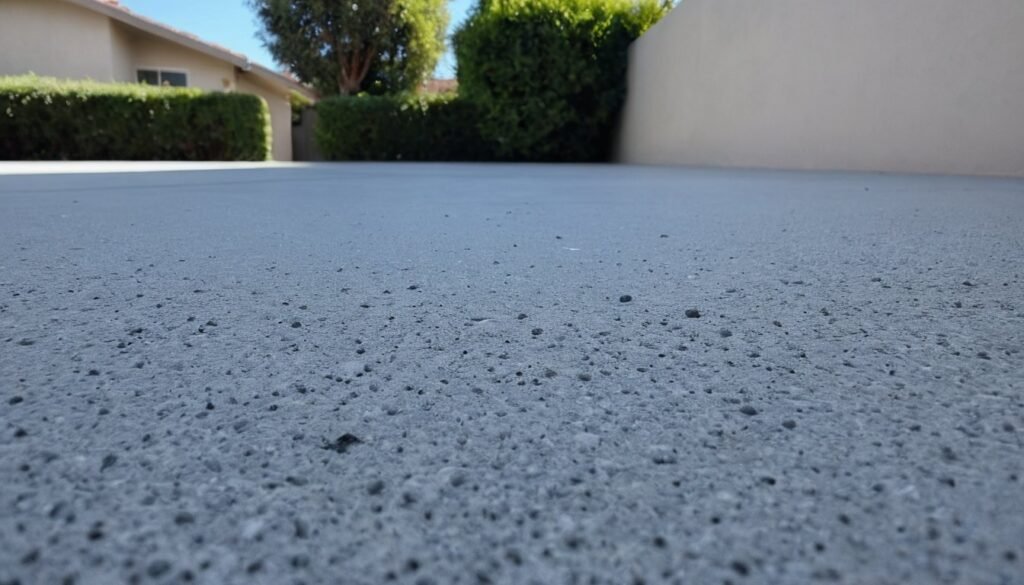
When the top layer peels off in thin scales, that is called spalling. It comes from moisture, from a weak surface or from harsh cleaning. We grind the loose bits, clean the area and apply a repair layer or a thin overlay.
For a large area, the better answer may be a fresh surface across the whole slab. Take a look at resurfacing if your flaking covers more than a few spots.
Steps, edges and corners
Steps take the worst abuse. Feet, rain, planters and moving boxes all bang on the edges. Chipped corners can be rebuilt with a mix that bonds to the old concrete. A step that has pulled away from the house or leans needs a closer look at what is underneath.
A railing post set in concrete that has loosened is a safety issue. We can reset it and tighten the surrounding concrete so the post feels solid again.
When we say replace instead of repair
Sometimes the honest answer is to start over. If the concrete is thin, soft or broken into many pieces, patches will not last. We explain why, show you the problem spots and give you both prices.
If a driveway is the issue, our driveway page has a focused look. For a whole slab, a call is the quickest way to find out.
Before you call
These details help.
- Where is the damage and how big is it?
- Has it changed since last winter or last summer?
- Is anyone at risk of tripping?
- Do you know what is underneath, such as a pipe or sprinkler?
Repair questions, answered in plain talk
The back step wobbles whenever someone walks on it. Is that dangerous?
It can be, so take it seriously, but it is also very fixable. A wobbly concrete step usually means the base under it has washed out or settled, or the step has separated from the house. A step that moves under foot can tip, and a fall from even a short step hurts.
To check, press on each corner and see if it rocks. Look at the gap where the step meets the house. If you can slip a finger in, that gap has grown. Also look for soil washed out beneath the lowest edge.
The fix depends on what we find, and concrete repairs on steps vary a lot. Sometimes we can lift and support the step by filling the void underneath. Sometimes the step needs to be broken out and rebuilt with a proper base and a connection to the house. In the meantime, keep kids and older relatives off it. Send a photo of the step and the gap with your estimate request, and we will tell you which kind of fix it looks like.
There's a big flaky patch on our patio where the surface keeps peeling. What causes that?
That peeling is called spalling, and it has a few common causes. Water that soaks into a weak surface and then dries, hard cleaning with strong acids or a pressure washer set too high, salt or fertilizer on the surface, and concrete that was finished too early while water was still rising can all do it.
On patios, sprinklers are a frequent culprit. Hard water leaves minerals on the surface, and the daily wet and dry cycles slowly break the top layer. If the flaking is in a small area, we grind out the weak surface and put on a patch. If it covers a big area, a thin new surface layer can bring the whole patio back to life.
We will look at how much is loose, test with a tool and tell you what makes sense. Redirecting the sprinkler head helps keep the repair looking good. Ask about a sealer after the repair to guard against the next round.
A crack runs right through our slab. Is the house going to fall down?
Almost certainly not, so take a breath. Most concrete repairs for cracks like this are quick. Most slab cracks are cosmetic, caused by shrinkage or minor soil movement. They are annoying, not dangerous. Still, a few kinds deserve attention: cracks wider than a quarter inch, cracks where one side sits higher than the other, cracks that keep growing and cracks that run through a wall as well as the floor.
If the crack is in a garage floor or patio, it is rarely a structural problem. If it appears inside the house and doors start to stick, that is when we suggest a closer look at the foundation. Our foundation repair page explains that side.
For a simple crack, we clean it and fill it with a product that suits the movement. We also check for a cause, like a leaking pipe or poor drainage. Take a photo with a ruler or coin next to the crack, and mark the end of it with a pencil and a date. That helps us see if it is growing.
What's the difference between a repair and a resurface?
A repair fixes a specific spot. A resurface covers a whole surface. If you have three cracks and a chipped corner, repair each one and you are done. If the whole patio looks tired, stained and flaky, a resurface can give you a fresh top layer over the sound concrete underneath.
A resurface is not magic. It needs a solid slab to bond to. If the slab is moving, cracked in many places or sunken, a new layer will crack right along the same lines. That is why we check the structure before suggesting it.
The cost difference can be large. A set of concrete repairs is often cheaper than a resurface, and a resurface is often cheaper than replacing the slab. We lay out the options and show you where each one makes sense. If you are leaning toward the whole surface, see our page on resurfacing concrete and then call us with questions.
Can concrete repairs match the color of the old concrete?
We can get close, and we are honest about the limits. Concrete changes color as it ages. Sun, rain, dirt and foot traffic all alter the surface. New concrete starts lighter and usually darkens over a few months, though it may never match exactly.
For small patches, we choose a repair mix that is close to the existing shade and blend the edges. For bigger repairs, color can be added to the mix, or we can stain the area afterward to even it out. Staining is a good way to hide patches and make the whole surface look uniform. Our staining and sealing page shows what is possible.
If color matters a lot, tell us at the start. We can make a small test patch in a hidden corner, let it dry and compare it with the old surface in daylight. That way you see the result before the full repair is done, and nobody is surprised.
How long do repairs last, and can they fail?
Well done concrete repairs on a stable slab can last for many years. A repair on a moving or wet slab may fail sooner, because the cause is still there. That is why we spend time on why the damage happened. Fixing a crack without fixing a leak or a drainage problem is like mopping the floor while the faucet runs.
Materials matter as well. Flexible sealants last longer in cracks that move. Strong repair mixes work for edges and corners. Bonding agents help new concrete grip old concrete.
We also tell you what to do after the repair. Keep sprinklers off it for a few days, avoid harsh cleaners and check it again after the first heavy rain. If a repair we made starts to fail early, call us and we will look at it. The goal with concrete repairs is a fix you can forget about. Most of the time, that is exactly what happens.
Something in your concrete bugging you? Call (408) 790-0568 or drop us a line on the estimate form with a photo or two.