
In 1844, a treaty was signed at Rancho Santa Teresa. History books call it the Treaty of Santa Teresa, and it happened on land that José Joaquín Bernal received in 1834. The adobe is long gone, but the Rancho Santa Teresa Historic District still preserves part of the original ground.
These days the same land holds light rail stations, tech campuses, townhomes and neighborhoods where kids ride bikes to Bernal Intermediate. A concrete contractor in Santa Teresa CA works on all of it, from driveways to parking lots.
South of everything, in the best way
Santa Teresa is the southernmost urban district of San Jose, with Coyote Valley to the south, the Bayshore Freeway to the east and the Santa Teresa Hills separating it from Almaden Valley. Tulare Hill stands between the southern tip and Coyote Valley.
Streets like Cottle Road, Santa Teresa Boulevard, Snell Road, Bailey Avenue and Great Oaks Boulevard carry most of the traffic, and VTA light rail serves the Cottle, Santa Teresa and Snell stations.

Homes first: a concrete contractor in Santa Teresa CA for driveways and slabs
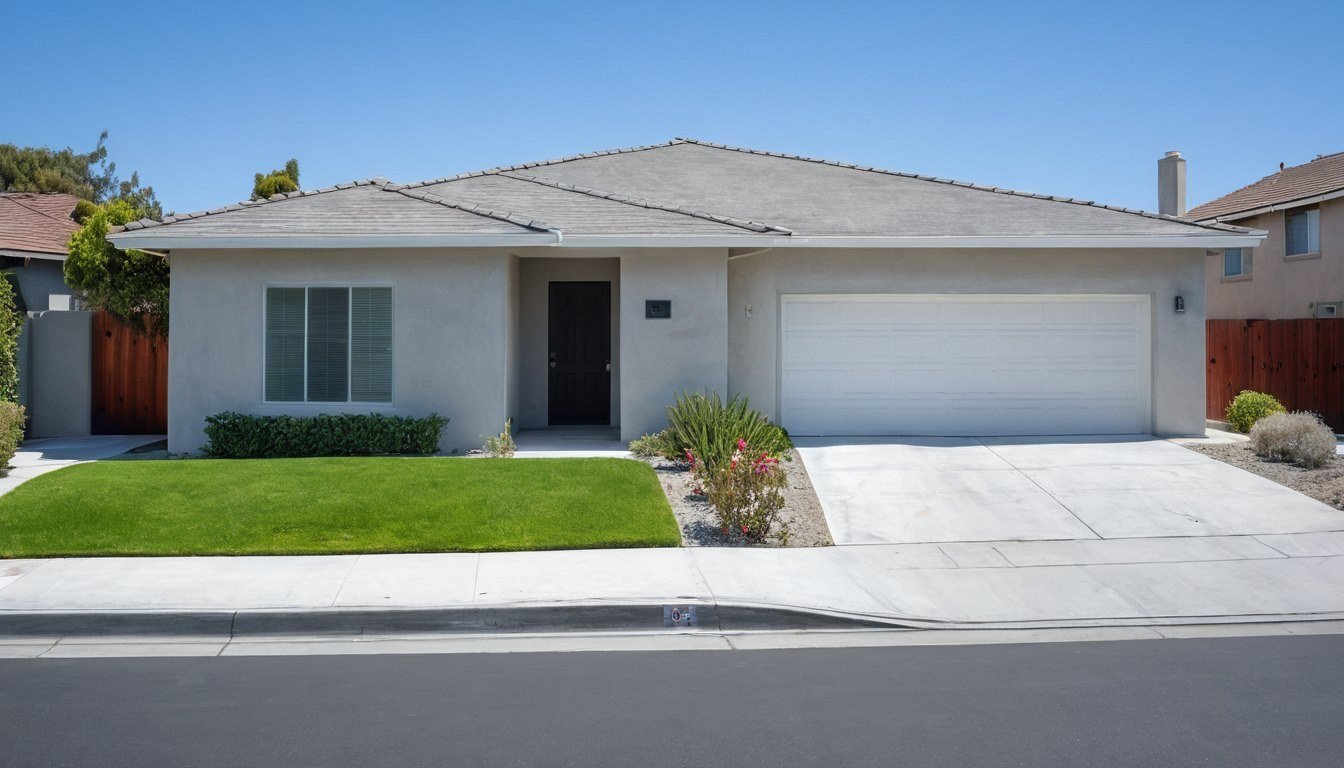
Most calls to a concrete contractor in Santa Teresa CA from homeowners are about driveways that have cracked, backyard patios and the slab for a shed or a backyard unit. Parks like Palmia Park and Santa Teresa County Park draw families outside, and good patios give them a place to land at home.
See our driveway page and slab page for how we prepare the ground.
Business lots near the tech campuses
With campuses and offices in the area, plus the Kaiser medical center, parking lots and delivery areas see heavy use. Concrete lasts longer under trucks and stays cooler in summer.
If you manage a lot, our parking lot page explains how we phase work to keep a business open and plan drainage and accessible stalls.
Creeks, hills and a short list of rules
Canoas Creek runs near Santa Teresa High School, and Coyote Creek forms part of a boundary to the east. Yards close to those creeks may need extra drainage care.
Santa Teresa is part of San Jose, so the owner pays for the sidewalk, curb and driveway approach next to the lot, with a permit first.
From an old ranch to a new light rail line, a concrete contractor in Santa Teresa CA works across a lot of change, and we enjoy every bit of it.
Santa Teresa questions, home and business
We run a small business near Cottle Road. How does a concrete contractor in Santa Teresa CA keep our lot open during work?
By phasing the job. We divide the lot into sections and work on one at a time, so customers and deliveries still have a path. Before we start, we ask which days and hours are busiest. We schedule the loudest or most disruptive work for slower times, and we begin early so a section is done before the lunch rush.
Signs, cones and clear paths guide customers. We tell tenants and staff ahead of time which areas will be closed and for how long. Since fresh concrete needs a few days to cure, we show you a drawing with each phase and date. If a delivery truck needs a spot, we make room.
We also think about drainage and accessible stalls, since the lot should meet the rules when it is done. For a small lot, the whole project may take a week or two. For larger ones, longer. Our parking lot building page explains what we do in more detail. Tell us your busy hours and any seasonal rush, and we will plan around them.
Is the soil in south San Jose any different from the rest of the valley?
It is similar in some ways and different in others. Much of the valley floor has clay that swells and shrinks, and Santa Teresa is no exception. Closer to the hills, soils can include more gravel and rock, and slopes appear. Near Coyote Creek and Canoas Creek, the ground may be damp or alluvial, meaning deposited by water over many years.
That is why we look at each site instead of guessing. We dig, probe and examine the base. For small jobs, we prepare the base with the same careful steps: remove soft spots, add crushed rock and compact it. For bigger projects, a soils report tells us how deep to dig and what to use.
In a place like Santa Teresa, where new construction mixes with older homes, we often see fill soil that was placed during development. Fill must be compacted well, or it settles. If your slab has sunk, that may be the cause. Take a look at our leveling page to see how we raise sunken slabs. We are glad to look at your site and explain what we see.
We live near the light rail line and our driveway is cracked. Could the trains be doing that?
It is possible, though not likely for most homes. Light rail trains produce vibration, and in places very close to the tracks, that can matter. For most neighbors a few blocks away, the cause is more ordinary: clay movement, poor base, tree roots or water.
Cracks that follow a straight line across the driveway usually come from shrinkage and missing joints. Cracks that form a web or have one side higher point to soil problems. If the cracks run parallel to the tracks and you are very close, vibration might be a factor, but we would look for other clues first.
We inspect the slab, the drainage and the base. We also ask when the cracks began and whether they match a construction project nearby. If the cause is clear, we fix it and tell you. For a stable crack, a flexible filler is enough. If the slab has moved, lifting or replacing may be better. Take photos and mark the ends of the cracks with a date. That gives us a record to work from.
Our townhome has a small patio that floods every storm. Can concrete fix that?
Often, with a few changes. Small patios flood because they are low, flat or surrounded by walls that trap water. The fix starts with slope. We can regrade the patio so water flows to a drain or out through a low point. If the patio is too low, raising it with new concrete may help.
We also look at roof drains and downspouts. Many townhomes send roof water straight onto the patio. Redirecting that water through a pipe to a safe outlet can end the problem. A small drain with a grate in the lowest spot can handle the rest.
Because townhomes often have shared walls and HOA rules, we check what changes are allowed. Some communities control patio work, and the board must approve a plan. We can provide drawings and samples for the HOA. A concrete contractor in Santa Teresa CA who has handled these cases can save a lot of back and forth. Send us a photo and tell us where the water goes during a heavy rain.
Can you pour a slab for a hot tub or an outdoor kitchen on a sloped yard?
Yes, with careful planning. A slab on a slope needs a level base, so we cut into the hill or build up with compacted fill. A retaining wall may be part of the plan to create a flat area. The slab must be thick enough for the load, with steel, and the edges need support so they do not wash out.
A hot tub is heavy when full, and an outdoor kitchen with stone counters and a grill is even heavier. We design the slab for those loads and often thicken the areas under the heaviest pieces. We also plan drainage so rain flows around the slab and not under it.
If the yard is steep, an engineer may be needed. We coordinate and follow the plan. Utilities matter too: electrical lines for a spa and gas for a grill should be placed before the pour. Our slab page has more details. Tell us what you want to place and where, and we will sketch a plan and give a price.
What do you suggest for a front yard that has a mix of grass and old concrete?
A clear plan. Mixed yards can look patchy, and a bit of design makes a big difference. First decide what you want to keep. Is the old concrete solid? If so, a resurfacing layer or a stain can unify it. If it is cracked or tilted, replacing the worst sections may be best.
Then think about paths and parking. A new walkway from the street to the door, a wider driveway or a small pad for a bench can improve the whole front yard. Borders of a different color or texture separate the grass from the concrete cleanly.
We can sketch ideas on paper or mark them with paint on the ground. Keep water in mind. We want the slope to drain away from the house and not onto a neighbor's lot. See our resurfacing page for ways to refresh old slabs. Small steps add up. A fresh path, a repaired apron and a clean edge make a front yard look cared for, and you can do the work in stages if budget matters.
Need a concrete contractor in Santa Teresa CA for the house or the shop? Call (408) 790-0568 or leave the details on the estimate form.