
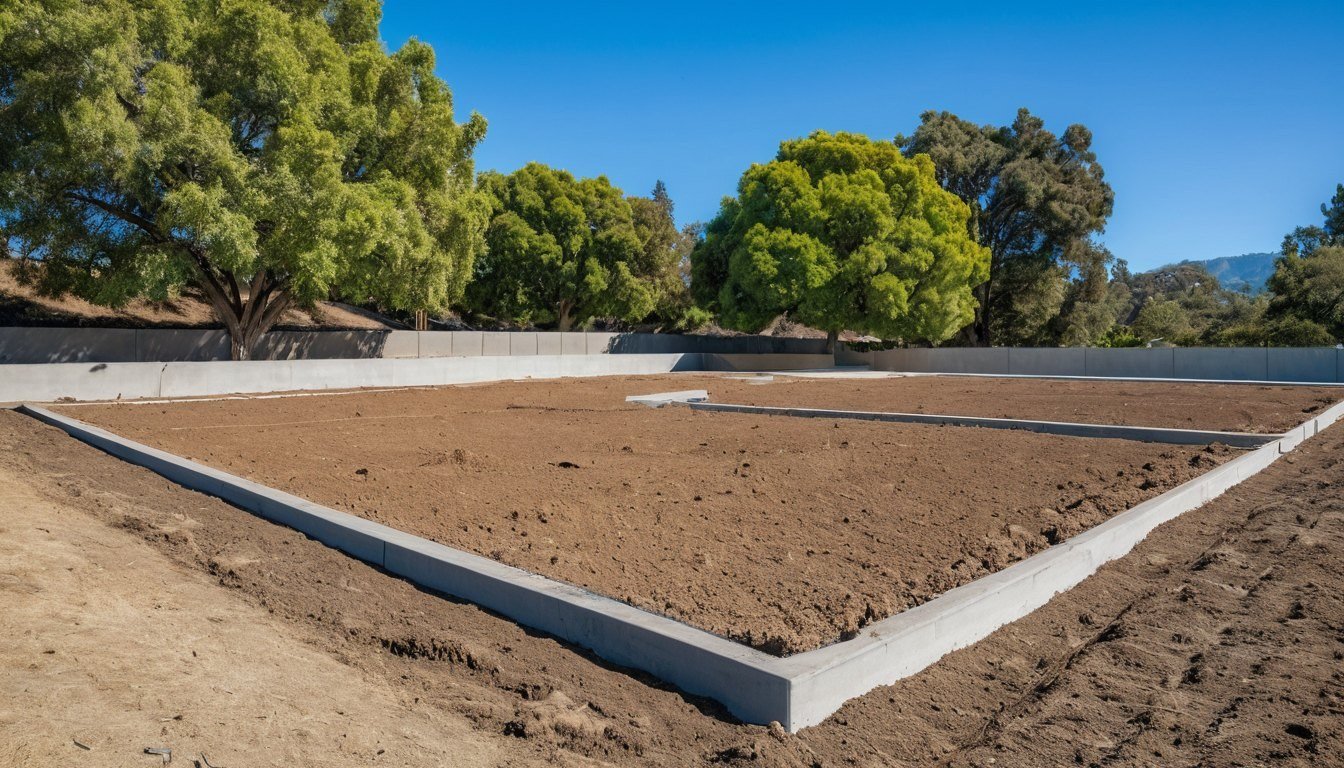
Somebody buys a shed kit on a long weekend sale and sets it on four patio blocks. By March one corner has sunk, the door sticks and a lawn mower is parked at an angle. The shed is fine. The ground under it was never ready.
A proper slab fixes that, and concrete slab installation in San Jose CA is mostly about what happens before the concrete arrives. We pour slabs for sheds, workshops, generators, hot tubs, planters and everything else that needs a floor that stays level.
Concrete slab installation is a floor you only get to build once
Concrete slab installation does not forgive a rushed base. If the dirt underneath is soft, the slab will follow it down. So we begin with the site: remove grass and roots, check how the ground drains, and mark the edges with string and stakes so you can see the real size before a single scoop of rock goes in.
That walk through is a good time to change your mind. A slab that is a foot wider on each side costs little extra now and gives you room later for a workbench, a ramp or a second door.

Dirt first, concrete second
Our valley clay moves with the seasons. To keep your slab from moving with it, we dig out the loose topsoil, add crushed rock, wet it a little and pack it with a plate compactor until it feels like pavement under a boot.
On a concrete slab installation, next come forms along the edges, steel or fibers inside, and a plastic sheet in places where moisture could rise through the floor. Only then do we call for the truck.
The load decides the thickness
A planter box needs less concrete than a lathe. A hot tub needs more than a bicycle shed. A truck lift needs a thickened edge and a plan for anchors. Tell us what will sit on the slab and we will size it, using a thicker pour or an extra layer of steel where the weight lands.
For homes, additions and backyard buildings with walls, the plans often call for a footing around the edge too. That belongs to a foundation, and you can read about it on our foundation page.
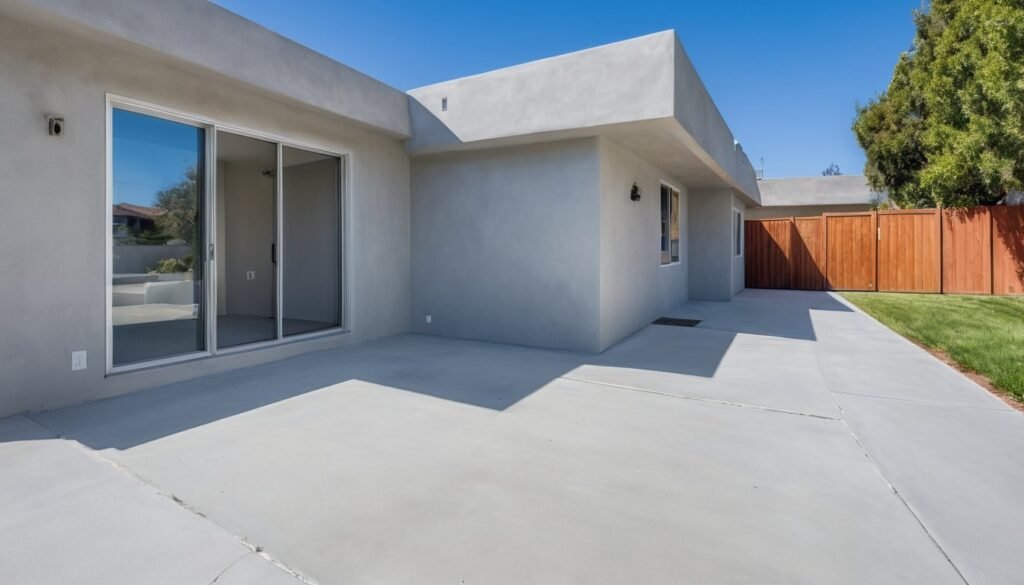
Edges, joints and a surface that matches the job
Workshops like a hard, smooth trowel finish that sweeps clean. Outdoor pads like a light broom texture so boots do not slide. Either way, we saw or tool joints into the surface to guide cracks, and we round the edges so a stray cart does not chip them.
If your slab will be near a driveway, we can match its look. Our driveway work uses the same careful base.
Before you call
Think about these and the estimate will be quick.
- What is the heaviest thing that will ever stand on the slab?
- Does a manufacturer give a required slab size for your shed or tub?
- Is there a utility line, a sprinkler or a septic cover near the spot?
- How will a concrete truck or wheelbarrow reach the site?
Straight answers about slabs
I'm buying a prefab shed that holds a lawn tractor and a workbench. How big and how thick should the slab be?
Start with the shed's footprint, then add some room. For a concrete slab installation like this, most people make the slab a little larger than the building on every side, which leaves a clean ledge for water to drip off and a spot to stand. Some manufacturers publish a required size, so check the paperwork and send us the sheet.
For thickness, a shed that holds a riding mower and a few tools is usually fine with a standard residential pour, with steel or fibers inside. If you plan a heavy workbench, a vise or a lift, we thicken the areas where that weight will stand. We can also make the whole slab thicker on the edges, where a heavy load tends to cause chipping.
Do not forget the door. A slab that slopes slightly toward the opening lets water leave instead of soaking into the floor. We build that slope in, and it is almost invisible once the shed is in place.
Is it safe to pour a slab on our clay soil, or will it crack no matter what?
Clay makes slabs move, but a slab designed for clay can behave. The two biggest tools are a compacted rock base and a thickness that suits the load. Together they spread weight and stop the soil from pushing up in one spot, which is the heart of any concrete slab installation on clay.
We also look at how water moves around the slab. If rain flows under one edge or a sprinkler soaks the soil beside it, the clay swells there and the slab tips. Fixing that with grading or a small drain is cheaper than fixing a cracked slab.
Still, every slab cracks a little. That is normal for concrete. Joints guide the cracks into neat lines, and fibers or steel keep the sides tightly held together. If you ever see a crack that is wider than a pencil line, or one side higher than the other, call and we will take a look. Early notes cost nothing.
How soon can I put the building or the equipment on top?
Plan to wait about a week before light loads and longer before anything heavy. Concrete gains strength as it cures, which is a slow chemical process that needs water and time. In a few days it can handle foot traffic. After a week it is strong enough for a shed frame or a small tool. For a heavy machine, a truck lift or a loaded trailer, we like to wait close to four weeks.
Hot, dry, windy days are tough on young concrete because the surface dries faster than the middle. We schedule pours around that when we can, and we keep the surface damp or covered in the early days if the weather is difficult.
If you are under a deadline, say so. Sometimes the answer is to pour earlier in the day, or to pick a different week. Rushing the load is rarely worth the risk. A cracked slab under a new building is a miserable thing to fix.
What's the difference between a slab like this and an actual foundation?
A foundation supports a building with walls and a roof that people live in. It follows building code, usually needs engineered plans and a city inspection, and often includes deeper edges called footings. A slab for a shed, a pad for equipment or a floor for a lean to is simpler.
The line gets blurry once you add walls, plumbing or electrical. A workshop with a bathroom, a studio with a heater or anything with a roof that is lived in will probably need the city's approval, and the slab becomes part of a foundation. Our foundation installation page covers that side, and the ADU slab page covers backyard homes.
If you are not sure which one you have, tell us the plan. We will say which category it falls into and whether to call the city before anything gets poured. A short phone call now beats a stop work notice later, and it keeps your insurance happy too.
There's a sprinkler line and an old septic lid near the spot. Is that a problem?
It is a good thing to know before anyone starts digging. Underground lines can break if a compactor rolls over them, and concrete poured over a septic lid makes the next pumping day expensive and loud. Part of our estimate visit is looking around for those surprises.
We call 811, the free utility locating service, before we dig. That marks gas, electric, water and other public lines. Private lines like sprinklers, a gate motor or a yard light are on you, so tell us what you know. If you have an old plan, photos or a landscape drawing, send them over.
Often we shift the slab a few feet to avoid a lid. When we cannot, we raise or reroute the line before pouring, or leave a neat access box in the concrete. Whatever we choose, we write it in the estimate so no one is surprised.
The truck can't reach our backyard. How does the concrete get there?
More often than you would think, the answer is a wheelbarrow and a strong crew. Side yards in San Jose can be narrow, with a gate that barely fits a trash can. If the mixer truck cannot back in, we deliver concrete in smaller loads and carry it to the form, which takes more people and more time.
Sometimes a pump is the better plan. A pump truck sends concrete through a long hose over the roof or around the corner. It costs extra but it saves a lot of effort on a big slab. We will decide which option fits at the visit, after measuring the gate and checking the path.
To help, take a picture of the gate and measure its width. Also tell us about any low branches or steep steps along the way. A narrow path changes the plan, but it rarely stops the job.
Not sure whether your project needs a slab or something bigger? Describe it here or call (408) 790-0568 and we will sort it out together.