
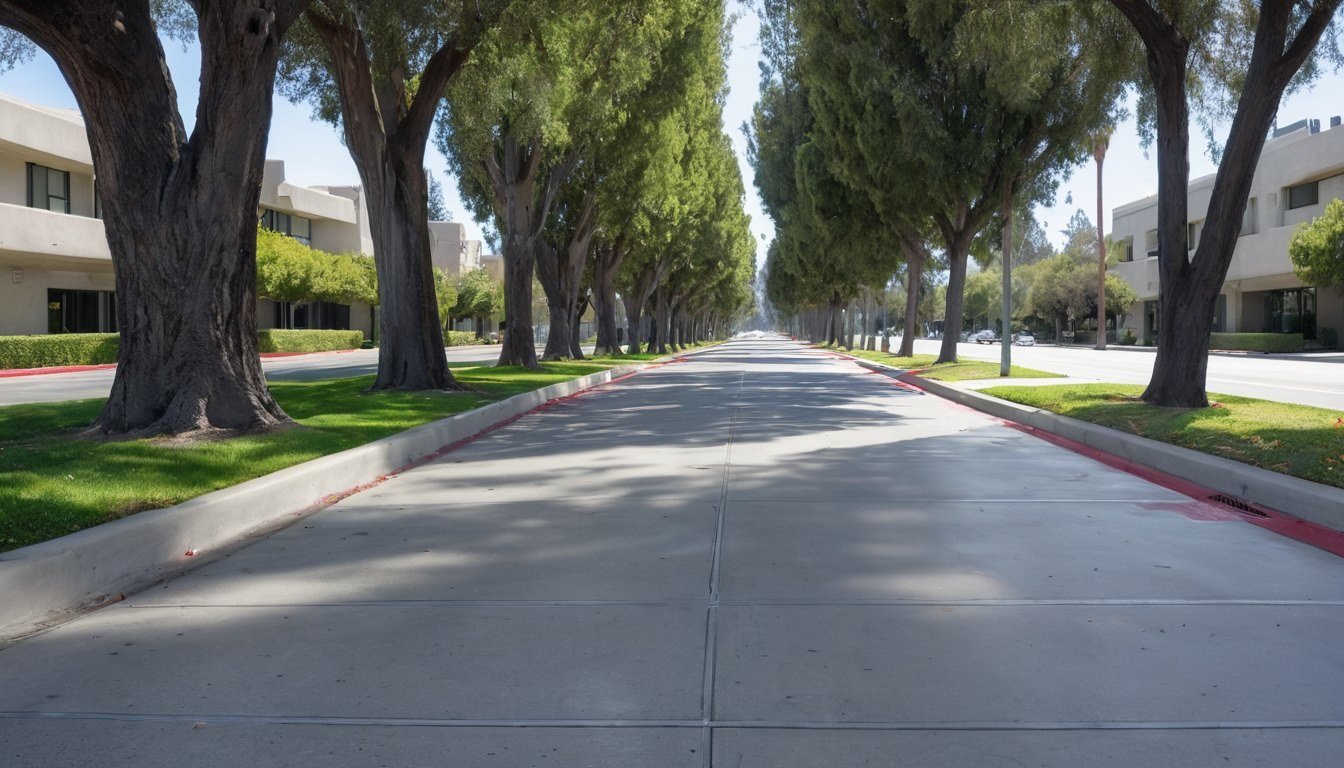
The envelope arrives on a Tuesday. It says the sidewalk in front of your house needs repair, and it lists a deadline. Nobody told you that strip of concrete was your job, and suddenly it is yours, along with a tree root the size of a rolled up rug.
Concrete sidewalk building in San Jose CA often starts with a notice like that, or with a stroller that keeps tipping at the same lifted panel. Either way, the goal is the same: a path that is safe, level and ready for inspection.
Whose sidewalk is it, really?
In San Jose, the property owner is responsible for the sidewalk, the park strip, the driveway approach and the curb and gutter next to the lot. A sidewalk repair permit is needed before the work starts, and the permit fee is billed after the city accepts the work.
It sounds like a lot, and it is manageable with a plan. We help you understand what the notice asks for and what the city will want to see when the job is done.
Roots, trees and a permit for each
Street trees are the owner's job too, and trimming or removing one needs a permit. The permit for a street tree is free, but you must get it first. That means roots under the sidewalk cannot be cut on a whim.
We plan around the tree. Sometimes the new concrete is shaped with a slight ramp over a root, or a narrower panel leaves room. Other times the city allows a different solution after review.
Concrete sidewalk building that is flat and smooth for everyone
Good sidewalks are level across their width, with only a gentle slope for rain. Seams between panels should be tight, with no lip a toe can catch. Ramps and curb cuts must meet the rules for wheelchairs, strollers and walkers.
We form each panel carefully and finish the surface with a light texture for grip. After pouring, we protect the work from pets, bikes and curious toddlers while it cures.

Front walks, side paths and the way to the door
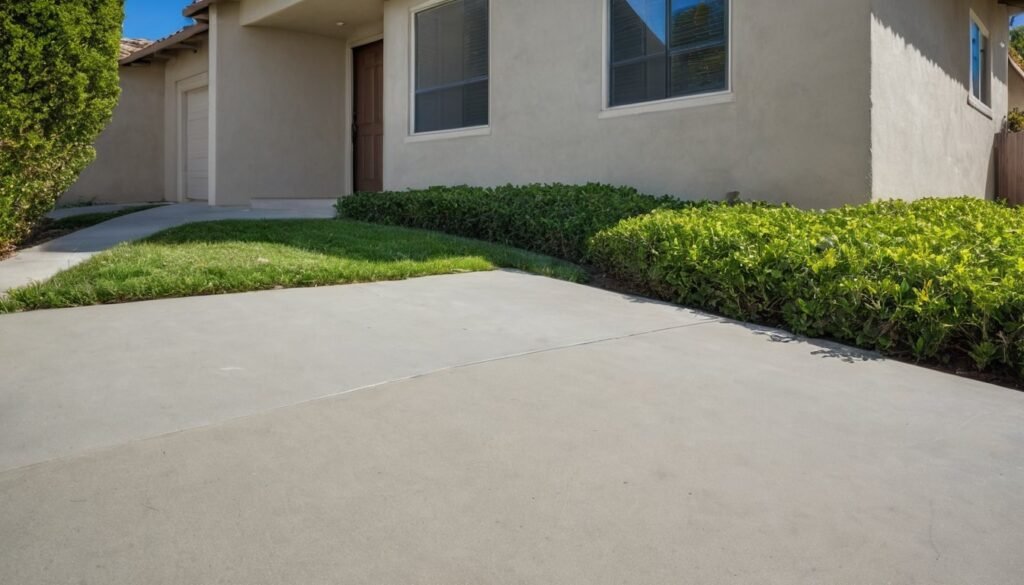
Concrete sidewalk building is not only about the city strip, and it is not only about repairs. We pour front walks that welcome guests, side paths for garbage bins and back yard routes where a wheelbarrow needs a smooth way.
A curved path with a colored border looks great, and you can read more about those ideas on our decorative page.
Before you call
Bring these to the first visit.
- A copy of any city notice, with the date and the deadline
- Photos of the lifted or broken panels from a few angles
- The location of any tree, light pole or meter in the strip
- Whether you are applying for city help with costs
Sidewalk questions, from notices to roots
We got a notice from the city about our sidewalk. What do we do first?
Take a breath and read it closely, because concrete sidewalk building on a deadline needs a plan. The notice usually lists the problem areas, a deadline and a contact number. Take a photo of the damage and note the date you received the letter.
Then call us. We visit, measure and give you a price for concrete sidewalk building that fixes the flagged panels and meets the city's expectations. We also explain the permit steps. In San Jose, a sidewalk repair permit is needed before work starts, and the fee is billed after the work is accepted.
If money is tight, ask the city about help. There is financial assistance for owner occupied single family homes when the city requires the work. A quick call or email to the trees and sidewalks team can tell you if you qualify. Do not ignore the notice. If the work is not done by the deadline, the city can do it and bill you, and that is rarely cheaper. We can usually work within the timeline, and we will tell you if we think it is tight.
A tree root has lifted the panel in front of our house. Can the tree stay?
Maybe, and the answer starts with the city. Street trees belong to the adjacent owner for care, and trimming or removing one needs a permit. You cannot hack at roots to fix a sidewalk without approval, and neither can a contractor.
What we try first is to keep the tree and change the sidewalk. A ramp over a root, a narrower panel, a curved edge or a slight shift toward the street can all work. We may also add a root barrier on the side facing the walk, so roots turn downward.
If the tree is large and the root problem is severe, a city arborist may allow removal, often with a replacement planting. We can show you photos of the situation and help you ask the right questions. Send us a picture of the base of the tree and the lifted panel, and we will tell you what we think is realistic. It beats guessing and waiting for the next trip hazard.
What slope or width does a sidewalk need so it is safe for wheelchairs and strollers?
Accessible paths are shaped by rules, and the details depend on location. In general, the walking surface should be wide enough for two people to pass or for a wheelchair to turn, flat from side to side with only a slight slope for drainage, and free of lips and gaps. Ramps at curb cuts have their own limits on slope.
On a city sidewalk, we follow the standard the city expects, and we check with the permit information. On a private walk to your front door, we use the same ideas because they simply feel better. A gentle path with a smooth surface is easy for everyone, from kids on scooters to grandparents with a cane.
Tell us if someone in your household uses a wheelchair or walker. We can shape the path, add a landing near the door and choose a finish with good grip. Our office is wheelchair accessible too, so we know how much it matters in daily life. Ask us to explain any measurement in plain words.
How long before people can walk on a new sidewalk?
A day is a good rule for light foot traffic, and a few days for everyone. The surface sets up within hours, but it is still soft inside. We put up barriers and signs, and you will want to keep pets and children away for the first day.
Bikes, scooters and strollers should wait about two to three days. Heavy things, like a loaded wheelbarrow or a trash bin with wheels, can wait a week. Concrete keeps gaining strength for weeks, and gentle use in the early days is the safest.
Weather plays a role. A cool, cloudy day lets concrete cure slowly and evenly, which is good. A hot, windy one can dry the surface too fast, so we cover and moisten as needed. If the city needs to inspect before the walk is used, we schedule that too. We always tell you the exact timing for your job. Small details like fresh footprints or paw prints can be avoided with a little warning to the neighbors.
Do I have to fix the curb and gutter as well?
If they are damaged and part of your frontage, probably yes. The same rule that makes the owner responsible for the sidewalk also covers the park strip, the driveway approach and the curb and gutter next to your lot. Gutters carry rainwater to the storm drain, so a broken one lets water pool or seep under the street.
At the estimate, we walk the whole frontage and note everything that may fall under the notice: lifted panels, cracked corners, a driveway apron that has pulled away and gutters with gaps. We price each item so you can see what the city wants and what is optional.
Often it makes sense to fix everything at once, and concrete sidewalk building for a whole frontage goes quickly. A single mobilization costs less than several trips, and the finished frontage looks consistent. If your project also includes a new driveway, take a look at our driveway building page to see how it ties in. We coordinate the permits so one inspection covers the work whenever possible.
Can we do the front walk and the sidewalk at the same time?
Yes, and it often saves effort. The front walk and the city sidewalk meet at one point, and the two should line up cleanly. Doing them together lets us match levels, joints and finishes, and it avoids a mismatched seam between old and new.
We do keep the permits separate in our minds. The sidewalk is in the public right of way and needs the city's permit and inspection. The front walk on your private lot may follow a different path, depending on the project. We explain which pieces need approval before we pour.
Plan for a few days of limited access to the front door, and tell delivery drivers and guests which way to come in. We can pour the walk in two stages so there is always a way in. For a fresh look, ask about a border, a broom finish or a color. A new front path is one of the best ways to make a house look cared for, and it helps visitors find the door.
Got a notice and a deadline? Call (408) 790-0568 before it gets stressful, or pass the details through the estimate form.