
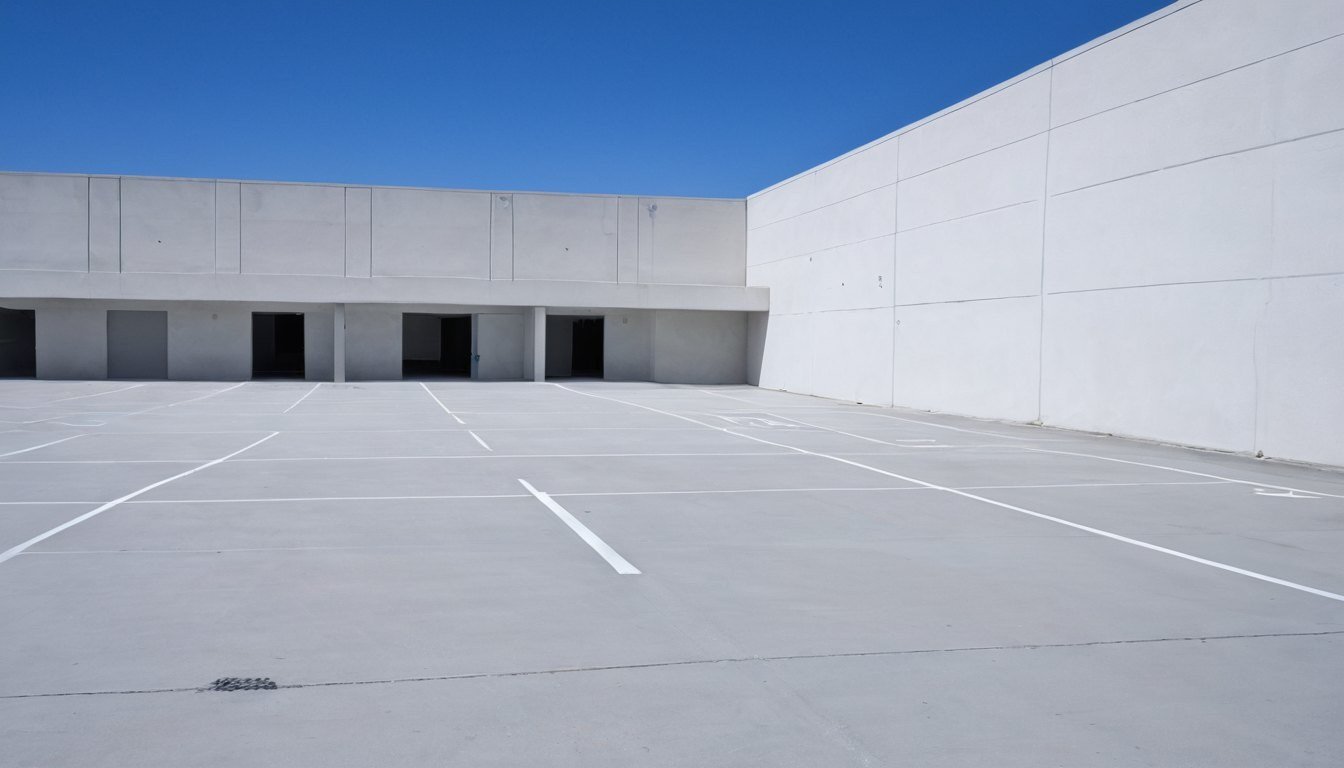
A business owner on a busy corner watches a delivery truck turn into the lot every Tuesday. Every Tuesday the same low spot holds a puddle that splashes the customer's shoes. After a few years, the pavement near the dumpster has chewed itself into a crater, and the owner starts doing math.
Concrete parking lot building in San Jose CA is a bigger kind of project than a driveway, with city rules, drainage, accessible stalls and customers who do not like orange cones. The key is to plan it so the business keeps running while the lot changes.
Why concrete for a lot
Asphalt is cheaper at first and needs repaving and sealing more often. Concrete lasts longer under heavy trucks, resists oil and stays lighter in color, which reflects heat. In a valley with long, hot summers, a cooler surface is a real benefit.
Concrete parking lot building also suits places where trash trucks, delivery vans and forklifts cause constant wear, like around dumpsters and loading doors.

Thickness, base and the load question
A lot for cars needs less concrete than a lot for trucks. Drive lanes and loading zones get a thicker slab with steel, and parking stalls can be lighter. The base under it is just as important, so we test the soil and plan crushed rock to match.
Clay is hard on pavement, and a good base spreads load across it. We tell you what we see and write the thickness and base into the estimate.
Slopes, drains and the rules for accessible stalls
A parking lot needs enough slope to shed water and not so much that a wheelchair rolls away. Accessible stalls, their access aisles and the path to the door have strict limits on slope and width. Stormwater rules in the Bay Area can also limit how fast and how cleanly water leaves a lot.
We work from your plans or the city's conditions, and we mark slopes and drains before forms go in.
Working around a business that has to stay open
We divide the lot into phases, so part of it stays open while another part is poured. Customers get a clear path, signs show where to park and the busiest hours are protected whenever possible. If you can close on a slow day, we use it.
Concrete needs time to cure, so we explain how long each section stays closed. Our cutting crew and demolition crew often handle the first phase.
Before you call
Useful information for a business owner.
- Approximate size of the lot and the number of stalls
- Which hours are busiest and when you can close a section
- Types of vehicles using the lot, from cars to semi trucks
- Any city notice, a landlord requirement or a plan set
Business owner questions about lots
We own a small strip of shops in Berryessa. Can the lot be redone without losing our customers?
Usually yes, with planning. Concrete parking lot building for a retail center works best in phases. We divide the lot into sections and pour one at a time, leaving paths open to the stores and a clear place to park. Signs, cones and barricades guide customers, and we keep walkways safe and tidy.
Timing matters. We ask which days and hours bring the most traffic. A section near a popular restaurant might be done on a slow weekday morning. A section in front of a clinic might be done on a weekend. Early starts help, since our crew is ready by dawn and can finish a section before the lunch rush.
Curing time also shapes the plan. A fresh section stays closed for several days, and we show you on a drawing which areas will be closed and when. Tell tenants early, so they can warn their customers. A short note on the door and a post on social media goes a long way. When the work is done, the lot looks clean, bright and ready for fresh stripes.
What thickness do we need for delivery trucks and a dumpster pad?
Trucks and dumpster pads are the hardest parts of any lot. A garbage truck weighs a lot when full, and its wheels sit in the same spot every week. Delivery vans and box trucks add up over time.
For those zones, we pour a thicker slab with steel inside and a stronger base. The dumpster pad often gets even more thickness and a reinforced edge. For parking stalls where only cars park, the slab can be thinner and less costly. The difference in cost between the two is why mapping traffic before the estimate pays off.
Tell us what vehicles use the lot, and how often. If a semi truck visits once a month, we plan for it. If a forklift runs daily, we plan for that. The numbers go into the estimate in writing, so you can compare them with any other bid. We also check drainage near these heavy zones, because standing water softens the soil under a slab and shortens its life.
Do accessible parking spaces really have so many rules?
They do, and for good reason. Accessible stalls need to be a certain width, with a marked access aisle beside them, and they must be on a path that is flat enough and wide enough for a wheelchair. The slope in those areas is limited, so water cannot be allowed to pitch the surface too steeply.
Signs, striping and the route to the entrance are part of the rules too. A lot that looks perfect from a car may fail an inspection if the path to the door is too steep or crosses a gap.
We pay close attention to those details during forming, since once concrete is poured the slope is set. We follow your plans or the city's conditions, and we check slopes with a level before pouring. Our own office has an accessible entrance, parking and seating, so we understand why this matters. If your lot has complaints about access, tell us. Concrete parking lot building is a good time to fix them.
Does the city have to approve a parking lot project?
Almost always, yes. Parking lots involve grading, drainage, accessible routes, striping, sometimes lighting and often landscaping and stormwater treatment. Cities in the Bay Area have strict rules about runoff, and a lot may need features that clean the water before it leaves the site.
The process usually starts with plans from a civil engineer or designer, a permit application and inspections as the work proceeds. For a simple repair or resurfacing of an existing lot, requirements may be lighter, but a call to the city confirms it.
We do not draw the plans, but we read them closely and build to them. If you do not have plans, we can recommend designers, and we can talk through the construction side so they design something that is practical to build. We also help with scheduling around inspections. If the city has already issued conditions, share them early. They tell us what must be included in the price, and nothing is left out by accident.
How long will the lot be closed, and what about rainy days?
A small lot, such as a few dozen stalls, can be done in a week or two when we phase the work. Larger lots take longer. Each section has to rest and cure before cars may roll over it, usually about a week, and longer for heavy trucks.
Rain is the wild card. We avoid pouring in a downpour, and a light drizzle may be handled with covers. We watch the forecast, and in the wet months we build in extra days. Dry spells in late spring through fall are the easiest to plan around.
We give you a schedule with sections, dates and closures, and we update it if the weather changes. If your business has a seasonal rush, such as a holiday sale or a school start, tell us the dates. We will plan around them. Customers forgive a short closure if they know about it in advance. Surprise closures are the ones that hurt.
Can you also handle the striping, wheel stops and curbs?
We handle the concrete parts: curbs, gutters, wheel stops that are cast in place and flatwork. Striping and signs are usually done by a specialty crew after the concrete cures, and we are happy to coordinate with them. Curing time is the reason. Fresh concrete needs to rest before paint goes on.
Curbs and gutters guide water toward drains and keep cars from rolling onto landscaping. We form them to the plan and pour them with the slab when possible, which makes a cleaner finished lot.
For accessible routes, we install ramps and landings in the right places and can add a textured surface for warning. Our sidewalk page covers some of those details. When the project is done, we do a walkthrough with you, check slopes, joints and drains, and hand you a clear plan for what to do after the work. Care is simple: sweep, clean spills and reseal joints when needed.
Running a business and need the lot to behave? Call (408) 790-0568 and we will plan around your busiest hours, or send the details through the estimate form.