
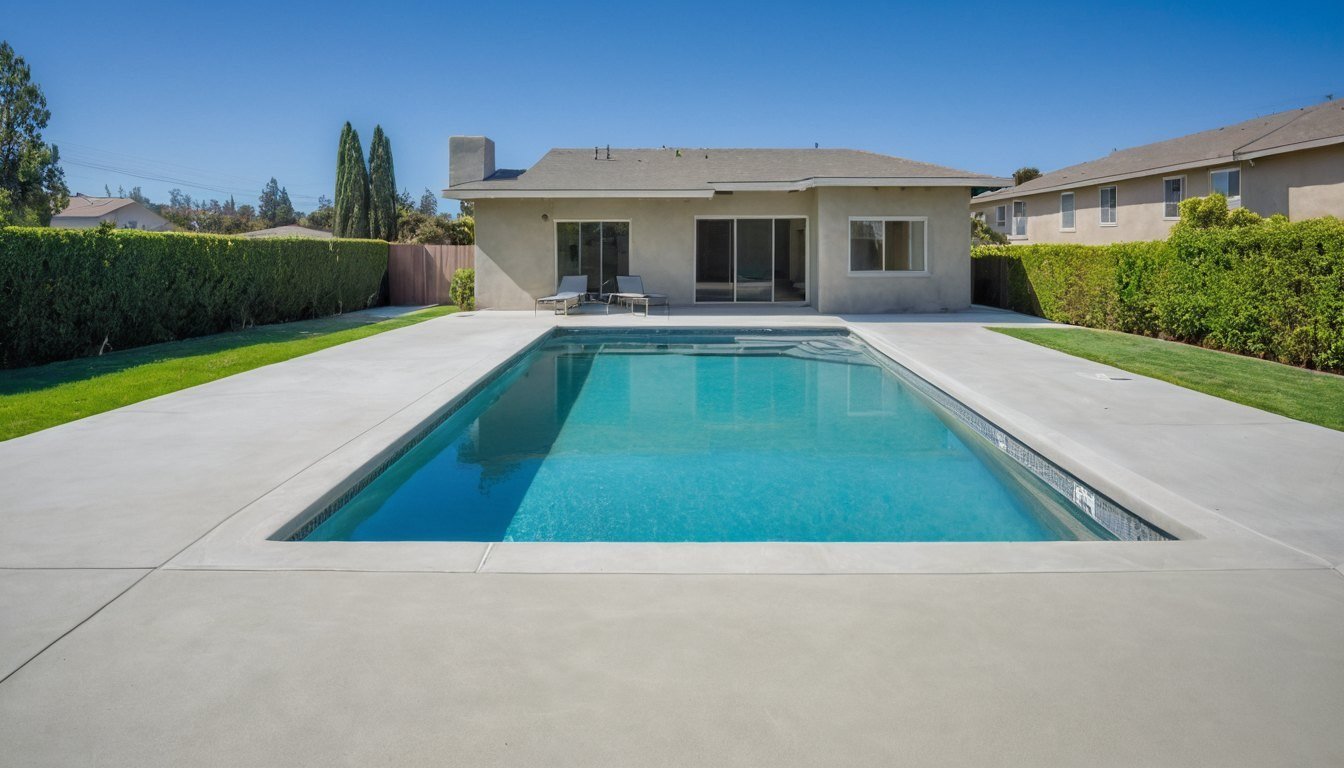
It is a July afternoon, and the thermometer in the shade says ninety something. The kids race out of the pool, shriek at the first step on the deck and hop back in. A hundred hot, dry days a year will do that to a dark, smooth surface.
Concrete pool decks in San Jose CA have to cope with sun, splashing, chlorine and bare feet all at once. When the deck is right, nobody thinks about it. When it is wrong, everybody dances.
Concrete pool decks start with the slope
Water from the deck must flow away from the pool, not toward it. A drop of about a quarter inch per foot is usual, enough to shed splashes and rain without making a chair wobble. Slope toward a drain or a planting bed that can handle the water.
Water that runs back into the pool carries dirt, fertilizer and sunscreen, and it can wash soil away at the edge of the shell.
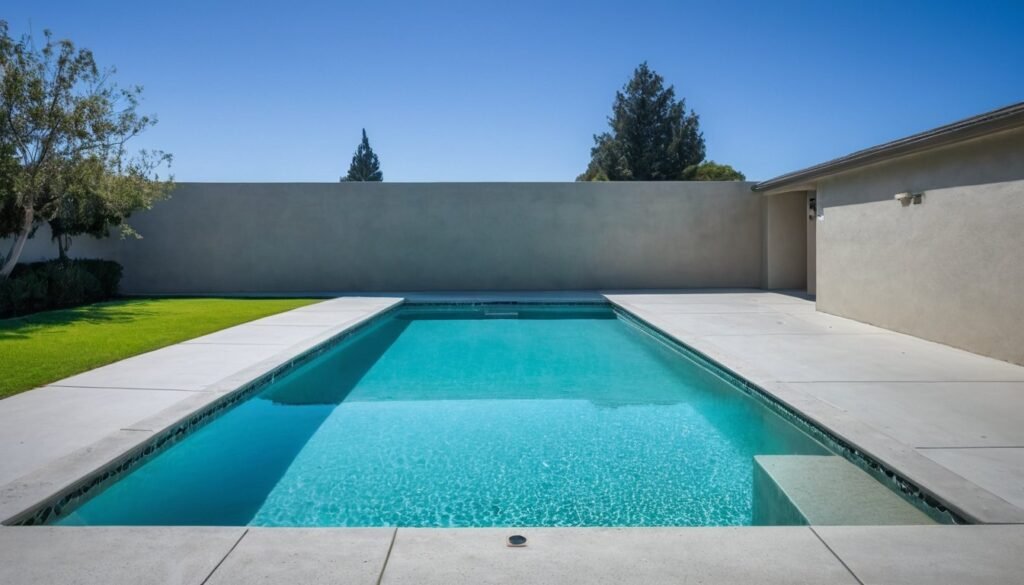
A gap that matters in concrete pool decks: the expansion joint
Between the deck and the pool, there is a joint, a flexible gap that lets the two move on their own. The pool shell and the deck behave differently with temperature and soil. Without a joint, they crack against each other.
We keep this joint clean and filled with a flexible material, and we protect it during the pour. It is easy to overlook, and it saves the deck.
Keeping concrete pool decks cool and grippy
Pale colors reflect heat. Special cool deck toppings and light colored finishes keep surfaces comfortable for bare feet. A fine texture gives grip without scratching skin.
Stamped patterns look good, though deeper patterns hold dirt and grip a little differently. Our stamped page explains the tradeoffs. For a lower cost refresh, see resurfacing.
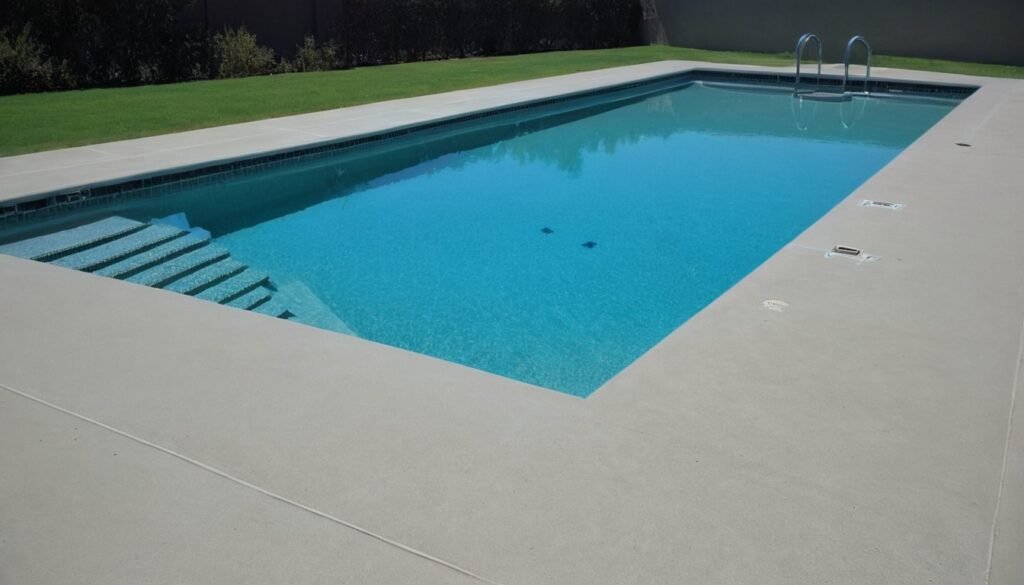
Chlorine, salt and hard water
Pool chemicals and splashing slowly eat at unsealed concrete. Salt water systems can be harder on surfaces than chlorine. Hard tap water leaves white deposits when drops dry in the sun.
A good sealer helps, and we suggest rinsing the deck now and then with fresh water. Keep sprinklers from hitting the deck, and wipe up the pool chemicals you spill.
Before you call
Share these details.
- Is the pool new, or is this a deck for an existing pool?
- How hot does the deck get in the afternoon?
- Where does the water go after a splash fight?
- Are there steps, planters or a spa to work around?
Pool deck questions, from wet footprints
Our concrete pool deck is too hot to walk on barefoot. What can we do?
You have a few options. A light colored finish helps a lot, since dark, smooth concrete soaks up heat. A cool deck coating, a special topping that reflects sunlight, can drop the surface temperature noticeably. Shade is a big one too: a pergola, a sail or an umbrella over the main walkway makes the biggest difference of all.
For existing decks, resurfacing with a light, textured product is common. We clean and prepare the concrete, patch cracks and apply the new layer in a color that suits your yard. You can read about the process on our resurfacing page.
If you are building new concrete pool decks, choose the color and texture from the start. We pour the slab, finish it with a broom or light texture and seal it with a product that does not trap heat. Keep in mind that no surface stays cool at the hottest hour of a July afternoon. Some wet footprints and a quick rinse before walking out is a trick that works for every pool owner.
How slippery should a pool deck be? Ours feels like ice when wet.
It should not feel like ice. A pool deck needs enough texture to grip wet feet without scraping them. A smooth trowel finish with a glossy sealer is the worst combination around water. A light broom finish, a fine sand texture or a knockdown texture works much better.
For an existing slick deck, we can add grip. Options include a textured resurfacing layer, a grit added to the sealer or grinding the surface to open the pores. Each changes the look a little, and we show you samples before choosing.
Safety around pools matters for everyone, especially children and older family members. A gentle texture, a proper slope so water does not sit and non slip treatment on steps all work together. Tell us who uses the pool and how, and we will plan around it. If a family member uses a walker or a wheelchair, we also think about path width and smooth transitions. A pool should be fun, and nobody should worry about a fall on the way to the water.
The deck is cracking right next to the pool edge. Is that dangerous?
Not usually dangerous in a structural sense for concrete pool decks, but it deserves attention. Cracks next to the pool edge often mean the deck and the pool shell are moving against each other, or the soil under the deck is shifting. Water can enter the cracks and wash soil away, which makes the problem grow.
First we check the expansion joint, the gap between the deck and the pool. If it is full of hard material or missing, the two parts have nowhere to move. We may recut and refill it with a flexible joint sealant. If the deck has dropped, lifting it may help. Look at our leveling page for how that works.
If the pool itself is leaking, the soil around it may be wet, and that is a job for a pool specialist first. Deck repairs are only as good as the ground under them. We look at the cracks, the slope and the joint, and we tell you which steps to take in order. Photos help, so take a few close ups and a wide view of the area.
Can you pour a new deck around an existing pool?
Yes, and it is one of the most common jobs we do. The existing pool stays in place, and we work around it. The old deck is removed with care, since we do not want to damage the coping or the shell. Our demolition crew handles that part with smaller tools near the edge.
Then we prepare the base, set forms and place steel. The slope is set to carry water away from the pool, and the expansion joint is formed along the edge. We also look at the depth of the existing coping, because new concrete should meet it at the right height.
We plan around the pool equipment, pipes and electrical bonding wires. Those are sensitive, and a plumber or pool technician may need to be present. Tell us about any known lines or equipment pads. We also protect the pool water with covers so debris stays out. It is a careful kind of work, and we do it slowly where it counts. When the job is done, the deck looks fresh, and the pool is ready for the next swim.
What is the best finish for a deck near a salt water pool?
Salt water pools produce mild chlorine, and splashing leaves salt on the surface. Salt can slowly damage unsealed concrete, so the finish and sealer matter. A dense, well cured concrete with a quality sealer resists salt better than a weak, open surface.
We suggest a light broom or fine texture, a sealer made for pool areas and a routine of rinsing with fresh water. A cool deck topping can add another layer of protection and keeps the surface comfortable. Avoid deep patterns that trap salt and dirt.
Flashings, metal fasteners and nearby plants also suffer around salt water, so choose materials with care. If your pool is new, wait for the concrete to cure fully before filling the pool or wetting the deck heavily. Our team talks through the details at the estimate. Whether it is a salt system or a standard chlorine one, the plan is the same: a good slope, a strong surface and simple care.
When is the best time to build or redo a pool deck?
Spring and fall are ideal. The weather is mild, the sun is not too fierce and the concrete cures slowly and evenly. If your family uses the pool every summer day, we aim to finish before the heat arrives, or after the season ends.
Winter works too, with some planning. Our rainy months can interrupt the job, and the pool area may be muddy. We watch the forecast and pour on dry days. The deck needs time to cure before heavy use, and fresh concrete should not be splashed for the first days.
A tip: if you plan to remodel the pool as well, do both at once. Replastering the pool, replacing tile and pouring a new deck can share one construction period and one cleanup. We coordinate with pool builders when needed. Book your deck early, since the busy season fills quickly. If a family event is coming, give us the date and we will tell you how far ahead to start. Concrete pool decks are a pleasure when done in the right season.
Ready for a deck that will not burn little feet? Call (408) 790-0568 any morning from five, or add your pool details to the estimate form.